When a government refuses to confront inequality, it builds a wall. It is easier than justice, faster than reform, and far less uncomfortable than asking why crime exists in the first place. The City of Cape Town’s proposed ZAR180 million wall along the N2 is being sold as a safety measure. In reality, it is a design choice rooted in fear, optics, and a long tradition of pretending that poverty disappears when it is hidden from sight.

This kind of decision never exists in a racial vacuum. In South Africa, walls do not simply divide space. They divide bodies, histories, and assumptions. The communities being screened off along the N2 are overwhelmingly poor and overwhelmingly Black. The message is intentionally wrapped in the neutral language of “risk mitigation” and “public safety” but it is nonetheless blunt: danger lives there, and safety belongs here. Crime is racialised by geography, and poverty becomes a visual contaminant to be managed rather than an injustice to be addressed.
This is where the wall goes beyond being offensive, and starts becoming familiar. Fascist movements have always understood that separation does half the ideological work for you. You do not need to convince people that others are dangerous if you can simply place a barrier between them. Walls externalise fear, harden prejudice, and erase context. They turn political failure into architecture and call it order.
The City insists that the wall will stop stoning incidents and criminal attacks on vehicles entering Cape Town. This is security theatre dressed up as urban planning. It assumes crime is static, unimaginative, and spatially obedient. It ignores the rather well-documented reality that criminals tend to go around, over, under, or through obstacles placed in their way. Sometimes they bribe. Sometimes they adapt. Sometimes they operate from the “safe” side of the wall entirely.
A wall does not dismantle criminal networks. It does not interrupt supply chains. It does not address motive, opportunity, or organisation. It simply moves the problem out of sight, which is, of course, the point.
This brings us to the most corrosive lie underpinning this project, that low-income communities produce criminals. More than being just wrong, it is also lazy, dangerous, and morally bankrupt. We do not know who these criminals are. We do not know where they come from, how they operate, or who benefits from their actions. Crime in South Africa is not a spontaneous chemical reaction triggered by poverty. It is structured, organised, and often profitable. To collapse this complexity into a moral judgement about low-income communities is quite simply scapegoating. Worse still, it blames people who are themselves the most exposed to violence.
The communities along the N2 are saturated by crime. They live without the buffers that wealth provides. They do not have private security patrols, high walls topped with electric fencing, nor rapid-response panic buttons. When crime happens there it does not become a headline because it is a condition of daily life. And yet somehow, such communities are framed as the threat rather than the threatened.
This is where the City of Cape Town’s moral priorities become impossible to ignore.
The urgency around this wall did not emerge because residents of these communities are unsafe. It emerged because tourists are. The crisis is not violence itself, but violence that interrupts the airport corridor, the welcome mat, the first impression. When locals suffer, the city shrugs and cites complexity. When visitors feel uneasy, budgets are magically unlocked and the concrete mixers roll in.
Tourist safety is treated as an economic imperative. Local safety is treated as an unfortunate complication. And so, we arrive at the real function of the wall. It is not about protection. It is about erasure.
The wall is meant to stop visibility, to hide poverty from passing eyes, to preserve the illusion of a “world-class city” untroubled by the realities that sustain it. This impulse, to sanitise space, to prioritise aesthetics over justice, to bulldoze truth in the name of development, has become a defining feature of Cape Town’s governance.
We have seen it in the city’s hostility to the Save Our Sacred Lands campaign. We have seen it in the Two Rivers Urban Park development, where community heritage voices about sacred spaces were treated as obstacles rather than stakeholders. Again and again, the same pattern emerges. Dissent is inconvenient, poverty is embarrassing, and development must proceed, even if it requires erasure.
This is neoliberalism flirting openly with authoritarian instincts. It is fascism without the theatre, exclusion without the rhetoric. It is clean, efficient, and devastatingly polite.
The obscenity of this project is sharpened further when one follows the money. ZAR180 million is being marshalled for concrete, steel, and the maintenance of denial. We are told, endlessly, that meaningful solutions to crime are too complex, too expensive, too difficult to implement.
This is simply not true. The truth is far more uncomfortable. Walls are chosen because better solutions would require the city to see people living in poverty as worthy of safety even when no tourist is watching. That refusal, to recognise dignity without an audience, is expressed in budgets, in planning decisions, and in what the city repeatedly chooses not to fund. And it is precisely here that the wall collapses as a solution and reveals itself as a choice.
The same funds earmarked for a wall could be used to strengthen community capacity, organisation, and agency. These are the elements that actually produce safety over time. Community-based safety workers, mediators, and first responders drawn from local neighbourhoods are sustainable solutions to crime and violence. Their effectiveness lies in presence, relationships, and accountability because they are forms of safety that cannot be outsourced or poured in concrete. Within a ZAR180 million budget, the city could sustain hundreds of such roles over several years, embedding safety within communities rather than imposing it from the outside.
Investment in youth employment and skills development sits within the same logic. Cities that have meaningfully reduced violence have done so by expanding people’s stake in their communities and their futures. Medellín[1] is particularly instructive because it reorganised power and possibility. By investing in education, mobility, public space, and local enterprise in historically marginalised areas, the city enabled young people to participate as producers of the city. Safety emerged through inclusion, opportunity, and shared ownership of place.
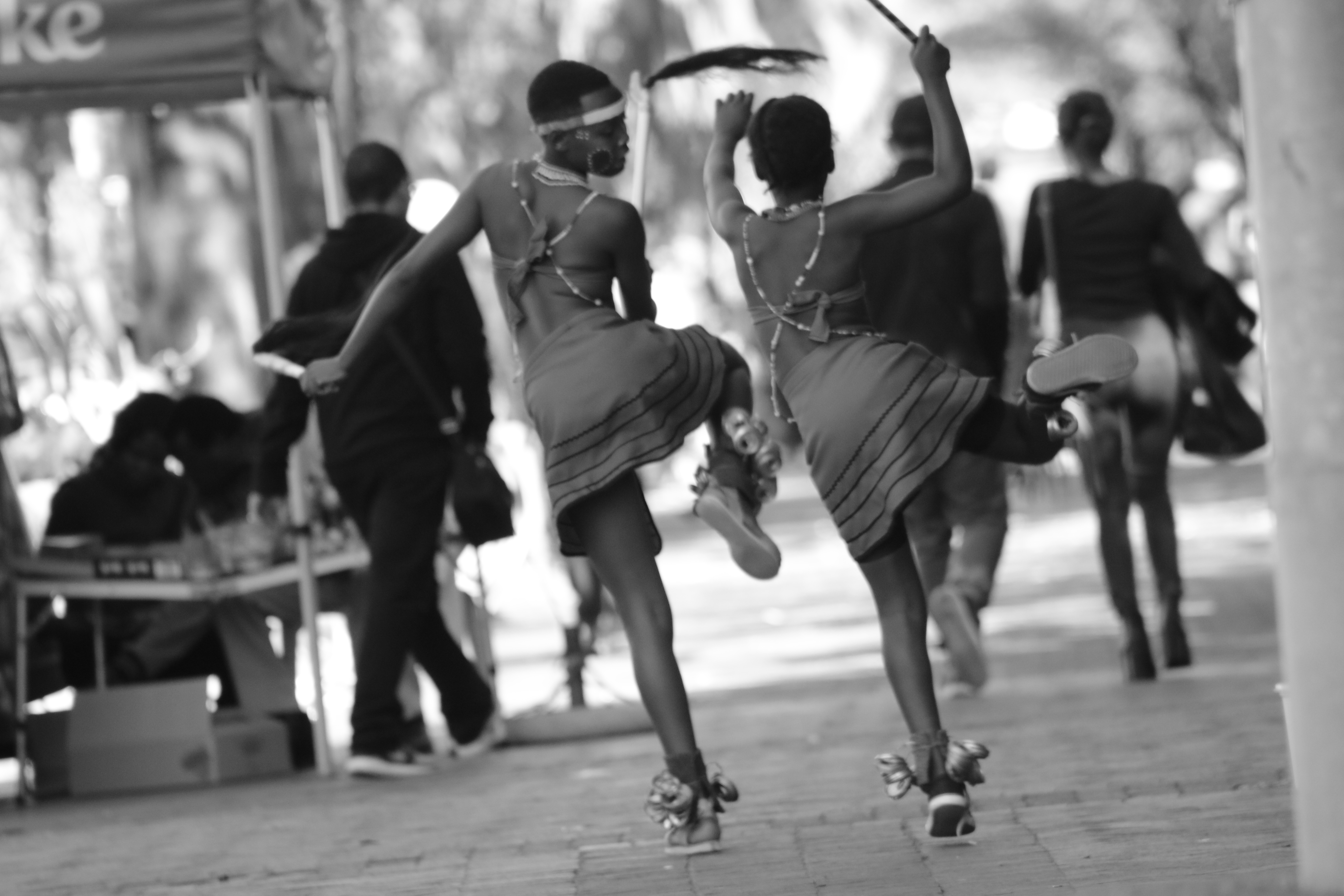
Culture played a central role in this process. Music, visual arts, dance, theatre, and community media were engines of mobilisation and cohesion. Cultural programmes created spaces where identity could be expressed, solidarity built, and public areas reclaimed. Youth orchestras, hip-hop schools, arts centres, and neighbourhood festivals strengthened social ties and made communities visible on their own terms. These initiatives displaced violence by filling public space with meaning, activity, and collective presence.
The same principle underpinned Glasgow’s[2] shift toward treating violence as a public issue rather than a moral defect. Community-led interventions, long-term investment in people, and a recognition of shared responsibility reshaped how safety was produced and sustained. In both cases the lesson is direct, which is that communities become safer when they are empowered to organise, care for one another, and shape the environments they live in.
Strengthening trauma-informed health services, substance-use support, and victim assistance fits squarely within this framework. Violence fractures social bonds. Repairing those fractures is part of rebuilding safety. Care, culture, and opportunity are therefore the foundation of community safety and security.
These are tested approaches to safety that are grounded in community agency, shared ownership, and sustained public investment. The question for Cape Town is why they are so readily dismissed in favour of concrete and concealment.
Safety and wellbeing is produced when communities are resourced to organise, to care for one another, and to shape the spaces they inhabit. This is slower work than pouring a wall, but it is also the only work that lasts.
Written by Merlin Ince
 Marginal Identity