Palestinian childhoods buried by our hesitation

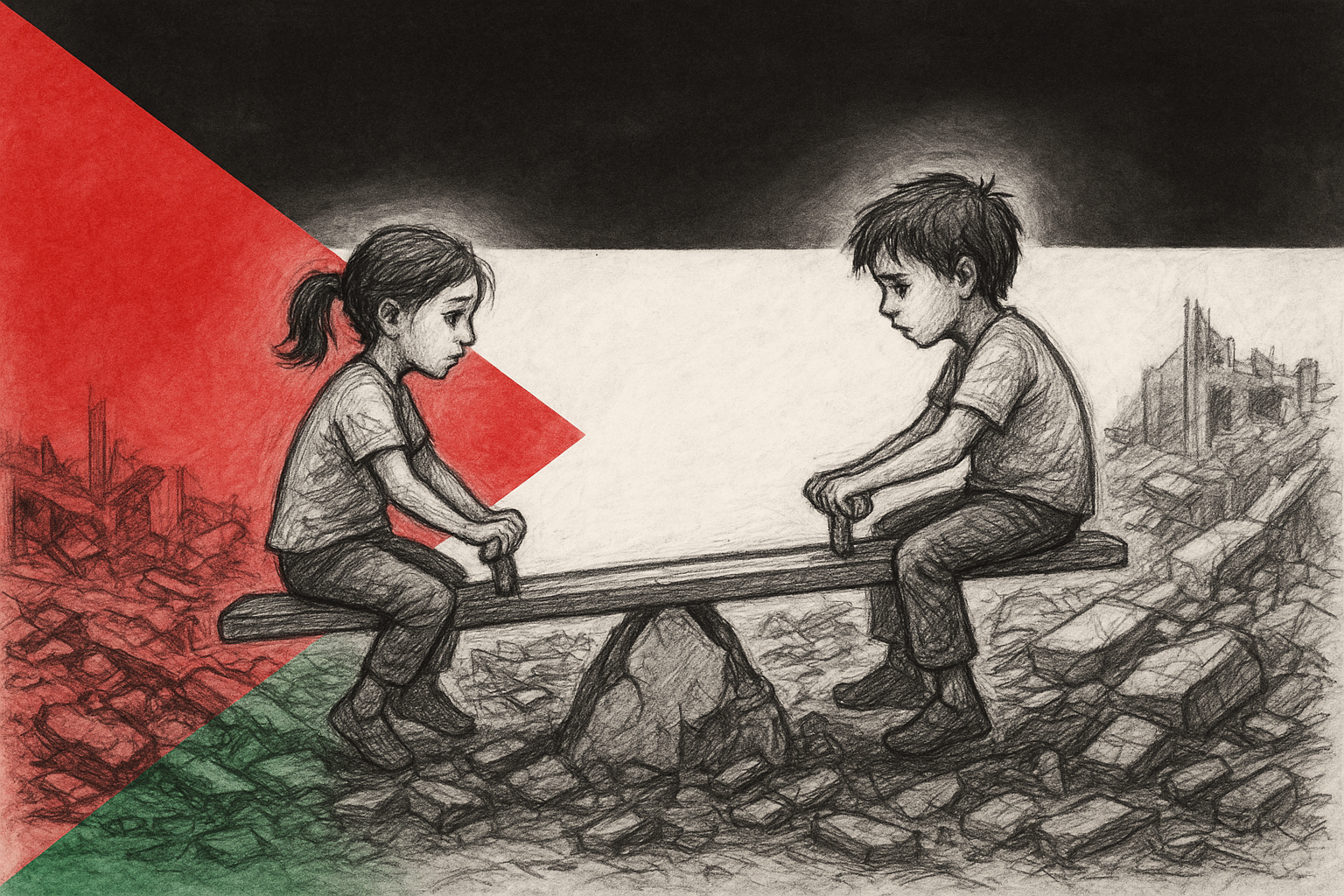
We have all been watching Palestine for decades. We have witnessed the blockade by Israel, the bombings, the rubble. We have seen the images of children deliberately targeted and killed, children with bandaged limbs, children pulling siblings from collapsed buildings, children writing in notebooks beside the ruins of their homes. And yet, it is only now, after tens of thousands have been killed, that some in the international community have begun to name this horror for what it is: a genocide.

Why must children bear the burden of our hesitation? Why do we wait so long to call evil by its name? Have we not learnt from history that, in every genocide, children pay the heaviest price?

In Southern Africa, during the 17th and 18th centuries, the genocide of the Khoi and San people began with the displacement of children. Severed from their ancestral lands, taken into servitude and forced to abandon their identity, their erasure ensued relentlessly by colonial powers[1]. With the Herero and Nama people, in the early 1900s, children were deliberately starved and denied medical care in concentration camps[2]. During the 1994 genocide in Rwanda, more than 300,000 children were killed, and an estimated 95,000 were orphaned in just 100 days. Thousands more were forced into armed groups, carrying weapons instead of schoolbooks, their childhoods stripped away in the violence[3]. Children were also systematically marked and targeted during the holocaust, with more than 1.5 million killed. Those who survived often endured medical experiments or brutal labor, their innocence erased as part of a calculated extermination[4].

In every case, children were not merely accidental victims of violence. They were deliberately targeted because they carry the possibility of a people’s survival. To erase children is to erase the future.

This same pattern has been unmistakably visible in Palestine. At least half of Gaza’s population are children, yet they have been among the most systematically killed and maimed by Israeli forces. Schools, playgrounds, and hospitals, as spaces meant to shelter the young, have been bombed repeatedly[5]. Countless children have been killed, with more buried under rubble or dying slowly from hunger and untreated injuries. Tens of thousands more are now orphans. This deliberate targeting of children in Gaza is not new, but the scale and sheer brutality is unprecedented.

We ought to recognize by now that the targeting of children is always the first and clearest sign of genocide. 

In 1948 the Convention on the Prevention and Punishment of the Crime of Genocide was passed[6], promising “never again.” The convention, while powerful on paper, is however tragically inadequate in practice. It defines genocide legally but is not proactive. It responds after catastrophe, rather than preventing it. It also relies on states to enforce action, but political alliances and veto powers silence urgent intervention. One of the greatest weaknesses is that the convention does not compel response at the first warning signs. The deaths of children become proof of genocide rather than a trigger to stop it. By the time the world officially speaks the word “genocide,” it is already too late for the children buried in shallow graves.

Beyond those who are mercilessly killed, survival is not free of pain. We know very well the trauma of violence that stubbornly lingers well beyond childhood.  Studies have consistently shown that trauma carried in childhood shapes generations. These are the ‘living genocides’, the slow, invisible killing of potential, joy, and hope. A girl who grows up without parents, without safety, without security, does not simply “heal” when the bombs stop. A boy who watches his family killed will carry that scar into adulthood, into parenthood, into the raising of the next generation.

Genocide is not only about the killing of bodies. It is about the killing of futures.

If we are indeed committed to “never again,” then the protection of children must be the red line we refuse to cross. What would it mean to rewrite our conventions with children at the center?

  • Early-warning triggers: If children are being targeted, displaced, or denied food, water, or medication, this should automatically initiate international investigations and interventions.
  • Mandatory protections: Bombing schools and hospitals should immediately trigger accountability mechanisms, without waiting for political approval.
  • Humanitarian corridors: Guaranteed, enforced pathways for children and families to access food, water, and medical care, even and especially against state objections.
  • Accountability: Leaders who order or enable the harming of children must face international justice swiftly, not decades later.
  • Denouncing hate speech: As a known precursor to genocide, dehumanizing rhetoric should be addressed through punitive action against those using and spreading derogatory terms about specific population groups. 

Perhaps the Genocide Convention already contains these principles in theory, but in practice, it has been ineffective. The world does not need more words. We need proactive legislation that protect children before their futures are destroyed.

Genocides expose the worst of humanity, not only in the cruelty of perpetrators but also in the apathy of bystanders. To remain silent while children are killed is not neutrality; it is complicity. To abstain from naming genocide is to allow it to continue.

Children should not have to carry the weight of our hesitation. We must act when it matters most. For the sake of our children, we can never hesitate to call evil by its name and confront it with all the courage humanity owes its future.

Written by Merlin Ince


[1] Adhikari, Mohamed. The Anatomy of a South African Genocide: The Extermination of the Cape San Peoples. Ohio University Press, 2011.

[2] Olusoga, David & Erichsen, Casper W. The Kaiser’s Holocaust: Germany’s Forgotten Genocide and the Colonial Roots of Nazism. Faber & Faber, 2010.

[3] Human Rights Watch, Rwanda: Child Soldiers, 2003.

[4] United States Holocaust Memorial Museum (USHMM), “Children During the Holocaust.

[5] UN OCHA, Occupied Palestinian Territory: Hostilities in Gaza, situation reports, 2023–2024.

[6] UN Office on Genocide Prevention and the Responsibility to Protect, The Genocide Convention.

From Colonizers to Gatekeepers: The Hypocrisy of ‘Unite the Kingdom’

Imperial State Crown with the Cullinan II diamond in the front band — a symbol of British colonial history.
The crown that says: Unite the Kingdom… but keep the jewels.
Photo: “Imperial State Crown.png”, Wikimedia Commons — Public Domain

When I first stumbled upon the slogan Unite the Kingdom, I must admit that I was quite charmed. Finally, I thought, this is the start of a campaign to stitch together all the countries torn apart by centuries of colonialism. How wholesome! I thought of a global support group where India, Nigeria, Jamaica, Kenya, South Africa and countless others sit around in a circle with Britain, sipping tea (fair-trade, of course), while mending the historical wounds inflicted by Britain’s globe-spanning land grab. But alas, forgive me. I was naïve. I really believed, for a fleeting second, that Britain had collectively decided to atone with a little kumbaya.

So, upon further reading I found that Unite the Kingdom is not a worldwide reconciliation festival. It is, in fact, a nationalist protest against immigrants, a movement that seeks to pull up the drawbridge and lock the gates. The very same Britain that once sailed across the seas planting flags in lands they couldn’t pronounce now insists that their borders must remain sacred and untouched. This is the country that looked at entire continents and thought, “Nice place, ours now.” They called it the Kingdom, extended it across vast oceans, and yet today, the descendants of that empire tremble at the thought of outsiders settling in their neighborhoods. History has never been so hypocritical, or so short of memory.

But let’s take a step back and play a little with the idea I had before I was rudely awakened. What if Unite the Kingdom really was about solidarity? Imagine a Britain that did not just wave flags and chant slogans, but actually opened its arms to the very people it once ruled. Imagine a Britain that said, “We are sorry about those centuries of exploitation. May we join forces to build a better future?” Outlandish, I know, but our imaginations are created to run freely so let’s go.

First, imagine cultural reinvestment. Instead of immigrants being scapegoated, the so-called Kingdom could finally acknowledge that its curry is better than its shepherd’s pie, and that its music, literature, and fashion owe just as much to Lagos, Kingston, and Mumbai as they do to London. A “united kingdom” in this sense would be a vibrant patchwork quilt, where the threads are made stronger by recognizing mutual debt rather than pretending one side invented everything.

Second, economic justice. Britain could actually return resources it once extracted. I am thinking, for instance, of the Cullinan diamond. It is the massive gem taken from South Africa and cut into pieces, one of which now sits smugly in the Imperial State Crown. Imagine if Unite the Kingdom meant returning stolen treasures, re-investing colonial profits in education and healthcare abroad, and creating equitable trade systems. Britain could stand up at the United Nations and say, “We’re here to give back, not take.” Can you imagine the shock? The applause? The memes?

Third, a world where migration is not demonized but celebrated, where the great irony is flipped inside out: the British once wandered the earth looking for opportunity (and gold, and spices, and, well, diamonds), so why can’t today’s migrants do the same without facing hostility? If Unite the Kingdom were reimagined, the narrative would shift from “they are taking our jobs” to “we are building a bigger table.” The empire took enough seats, so surely there are some left to share.

In this version of reality, “uniting” is not about shoving people out. It is about finally making good on the centuries-old promise Britain declared when it drew those pink patches across the globe: that we are all part of something bigger. To unite the kingdom in any real sense, there is a price of admission. Britain would have to look at its crown, that gaudy symbol of conquest, and say: Unite the Kingdom… and give back the diamond!

Written by Merlin Ince

Masking Inequality: How “Upper-Middle Income” can be a justification for neglect

Neatly and comfortably packaged classifications are often suspicious, especially when they are stamped on complex lived experiences. Shorthand labels like low-income country (LIC), lower-middle income country (LMIC), upper-middle income country (UMIC), and high-income country (HIC) feature prominently in global health and development discourse. These terms were designed as statistical categories, but in practice they have become proxies for assumptions about need, capacity, and progress. They have also come to shape how funding is allocated, how research priorities are set, and even how we imagine people’s daily lives across continents. 

What happens, though, when these neat categories conceal more than they reveal?

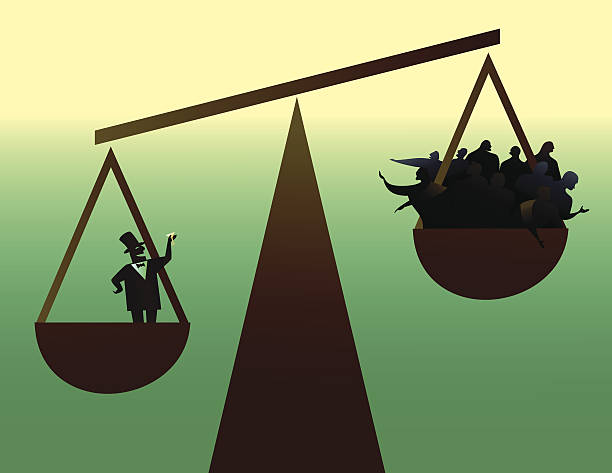
South Africa is one of the stark examples in this regard. The upper middle-income classification suggests, on paper, relative prosperity. It has come to imply that development aid is no longer necessary. The less comfortable and more messy reality, however, is that South Africa is the most unequal society in the world with a Gini coefficient of 0.671

Even more shocking is South Africa’s Palma ratio. This is the ratio of income share of the top 10% to that of the bottom 40%. While some low-income countries have a Palma ratio of around 1.2 to 2.6, South Africa has a ratio of 72. It is considered obscene inequality, with the wealthiest 10% earning approximately seven times more than the poorest 40%. It underscores the savage concentration of resources and the systemic neglect of the majority, often evidenced in maternal health and early childhood development narratives.

South Africa’s maternal mortality ratio remains stubbornly high, higher than some low-income countries in sub-Saharan Africa. Its child stunting rates, a marker of chronic malnutrition, rival or exceed those of nations with GDP per capita less than half of South Africa’s. Access to quality education is similarly bifurcated, with elite private schools boasting global standards, while vast numbers of public schools operate without libraries, laboratories, or even reliable toilets3.

With the ill-fitting but nevertheless neat classification of “upper-middle income,” donors often tend to look elsewhere, assuming that South Africa can take care of itself. The perception ignores not only inequality but also the deep structural legacies of apartheid, where race, displacement, and economic exclusion still determine life chances. The result is that communities most in need are left underserved, precisely because the classification system tells the world they are no longer “poor enough.”

South Africa is not alone. Other countries also uneasily bear their assigned categories, hiding enormous disparities beneath a statistical average.

Brazil is another upper-middle income country, with one of the largest economies in the world. Still, many communities face ongoing violence, food insecurity, and poor sanitation. The life expectancy gap between wealthy and poor Brazilians can be decades apart. Maternal mortality rates in Brazil’s northeast, which is home to Afro-Brazilian communities historically excluded from wealth, remain high and resemble those of much poorer countries. Between 2017 and 2022, Brazil’s national maternal mortality ratio (MMR) averaged 68.0 per 100,000 live births. Black women, however, faced nearly double the risk compared to White women: 125.8 vs. 64.2 respectively4

India, classified as a lower-middle income country, has a booming tech sector, a space programme, and billionaires whose fortunes rival those in Silicon Valley. It also has some of the worst child malnutrition statistics globally. Entire regions, particularly rural areas, continue to struggle with preventable diseases, high maternal mortality, and underfunded schools. The average GDP figure hides the fact that 230 million people live on less than $1.90 a day5.

Nigeria, Africa’s largest economy, is classified as lower-middle income. Oil wealth and a vibrant urban middle class project an image of prosperity, but Nigeria is home to over 90 million people living in extreme poverty. Maternal mortality rates are among the highest in the world, and vast disparities exist between the urban elite and rural communities. In 2023, Nigeria suffered 75,000 maternal deaths, accounting for nearly a quarter to a third of global maternal deaths. A regional breakdown reveals draconian inequality, with a woman in north-east Nigeria being 10 times more likely to die in childbirth than a woman in the south-west6

The danger of comfortable classification labels is that they shape the flow of resources and the scope of intervention. Many donors and international agencies use income classification as a crude eligibility filter. Countries like South Africa and Brazil are excluded from certain types of aid, under the assumption that they have “graduated.”  Global health studies often concentrate on “low-income” countries, leaving out populations in middle-income countries that face equal or greater risk. 

This skews evidence and reinforces blind spots. International recognition of inequality is too often confined to rhetoric. The persistence of categories like “upper-LMIC” allows policymakers to sidestep difficult questions about redistribution, justice, and the politics of exclusion. By using GDP averages as shorthand for development, we end up reproducing the very inequalities we claim to fight.

If we are serious about addressing human need, we must rethink how we classify countries. GDP per capita is a blunt instrument that obscures more than it illuminates. Alternative measures exist, such as the Multidimensional Poverty Index, inequality-adjusted Human Development Index, and disaggregated national statistics, that provide a more nuanced picture.

Development discourse must stop equating national wealth with social well-being. Inequality is a defining characteristic of modern economies, and it is often the main driver of poor health, poor education, and poor life chances. Funders and policymakers need to ask harder questions: Who is left out within these “middle-income” countries? Whose suffering remains invisible while averages tell a story of progress? How can aid and policy mechanisms reach those who live in wealth-shadowed poverty?

The point is not to shame or to single out any one country. South Africa, Brazil, India, and Nigeria are all navigating complex histories of colonialism, exploitation, and rapid growth. The common thread here is the way global classifications erase inequality, leaving millions effectively invisible to international solidarity.

It is time to name this masking for what it is. It is a failure of imagination. It is a refusal to look beyond averages. To call South Africa “upper-middle income” and stop there is to indulge in comforting fictions while ignoring the daily crises of maternal death, malnutrition, and failing schools. The challenge to funders, policymakers, and global institutions is simple but urgent. It is a call to move beyond the shorthand, to recognize inequality, and to not let the language of classification become a justification for neglect.

Written by Merlin Ince

References:

  1. Poverty and inequality statistics in South Africa ↩︎
  2. Persistent and obscene inequality ↩︎
  3. Thrive by Five Index South Africa ↩︎
  4. Racial disparities and maternal mortality in Brazil ↩︎
  5. India’s poor will not be wished away ↩︎
  6. Aid cuts threaten efforts to reduce to reduce maternal deaths in Nigeria ↩︎

Confined in Contempt: Representing the opaque voices of marginalized youth

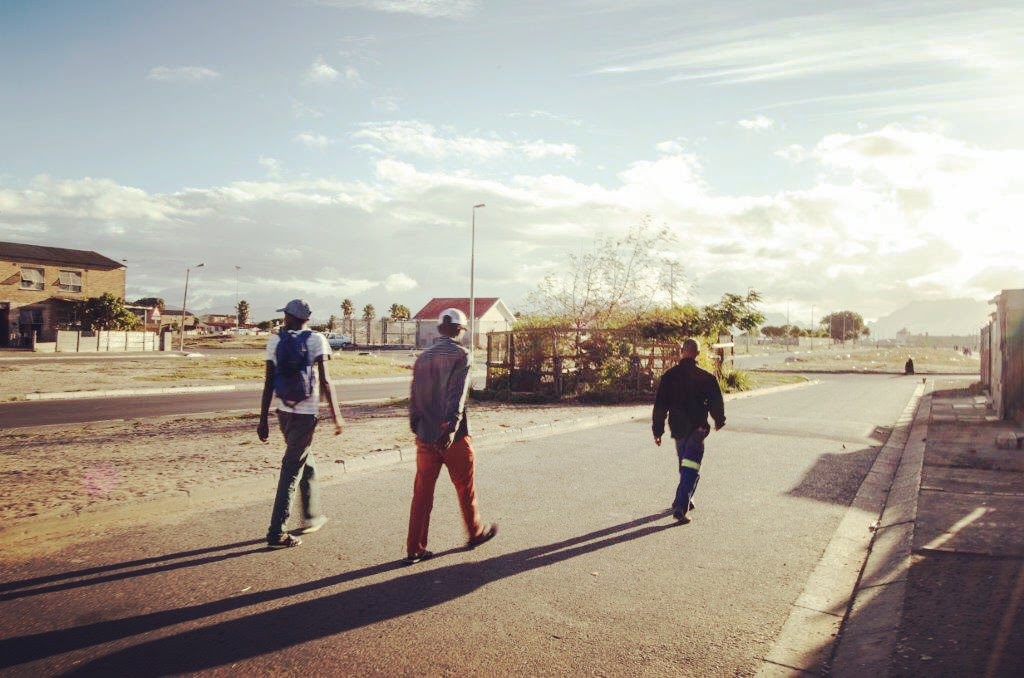
Youth setting out to work an evening shift as the sun sets on the streets of Manenberg

On a quiet and chilly July afternoon I headed out to Manenberg for a research interview. I was meeting with youth and their families, listening to stories about how they encounter social hardships in trying to find work. Manenberg is an underserved and marginalized neighbourhood on the outskirts of Cape Town.  As a relic of the apartheid-engineered city, residents still bear the contempt and pain of being forcefully removed and resettled on these dusty windswept plains of the Cape Flats.

Manenberg’s bustling streets were virtually abandoned on this afternoon, either an ominous sign of a gang fight or a more tempered measure of taking cover from the cold especially since the first rains had fallen. I decided to follow the cue from the presence of fruit sellers who would not have set up shop in the event of any impending unrest. I take my chances, as people do everyday in Manenberg.

I walk out from one of the apartment blocks,  and I am cautioned by the nervous gesture of a young man approaching me. We are on opposite sides for now, of the fence that cordons the territory of the block. He is outside and I am on the inside. He stops and takes a step back. His gaze is steady on me but I drop mine to counter his engagement. He persists. “Are you an American” he calls out, referring to one of Manenberg’s most notorious gangs called The Americans. I laugh nervously, realising the poignant intent of such a question in territory ruled by the rival Hard Livings gang. “No,” I respond feebly, “No I am not.” He continues towards me and we pass at the gate. He glances over his shoulder, “I thought you were an American coming to kill me.” And then with him now on the inside of the fence and I on the outside, he turns to triumphantly announce words that numb me, “I do the killing around here.”

People who straddle marginal identities, particularly gangsters, often display a certain contempt that disturbs us who are outsiders. We interpret it as a cold disregard for mainstream society values and this is what shocks, abhors and horrifies us. We do not live in their world. We live far removed from the brutal realities that have turned little boys playing soccer on the street into knife-and-gun-wielding criminals. And because we live so far away from this world, we do not understand.

This is not an attempt to condone heinous crimes. It is rather an endeavour to discern what breeds such contempt in the hearts and minds of young men who belong to gangs. Brazilian author Jorge Amado, in his most famous novel, Captains of the Sands, gives an evocative portrayal of a group of street children who operate as a gang, thieving out a living on the streets of Salvador de Bahia. Amado navigates this gritty story with a delicate hand, as a constant reminder that these are little children who have been orphaned and abandoned by the social structures that favour wealth and prestige. The empty warehouse in which they live is a metaphor of the loss they have suffered, of their families and of the comforts that every child deserves in order to know what it is like to belong. Instead they are savagely beaten and punished by police authorities and the staff of so-called reformatories. What they long for is the affirming touch and embrace of a mother’s hand, or the warmth of a nourishing meal and a bed to dream the dreams that keep hope alive: “All of them were looking for affection, anything out of that life.”

I don’t think that anyone ever chooses freely to live a life of killing, thieving, or hurting other people unless you are consumed by emptiness, when comfort and love seem like elusive luxuries that you are never entitled to. It becomes a hard and heartless life, as a young man in Manenberg explains about his marginal identity as a gangster. He speaks plainly, with determination and no need for apology, about what it means to defend one’s pride and dignity when you do not have much to hold on to:  “Don’t come running and try to pull me, no. I will hit you. I will make you very sore, you see. You can make me also sore and I don’t care… You gonna stab me, you gonna shoot me, it gonna heal again but the feeling inside can’t heal, my brother, you see no-one can heal this what you feeling inside…”

The youth whose stories I listened to over a four-year research period have offered a unique insight into the complexities of having dreams, talent, and ambition, yet having to contend with circumstances beyond their control that go against their aspirations. Youth who experience anger, frustration, despondency, often express this through external behaviour that does not convey a holistic understanding of their day to day experiences. When such youth are given an opportunity to tell their stories, we create a space for them to be seen and understood in a new light such that their plight may receive appropriate responses that are geared towards strengthening their agency to defy and transform their circumstances.

Perhaps one of the most telling examples of how structures impact on the way in which youth navigate education and employment is related by one of the young people from my research journey. Jennifer was filling out an application form for a training college programme and was required to name where she was from: “I didn’t know what to fill in there. It asked what suburb or township I am from and I thought, well I don’t live in a township or a suburb. I live in a ghetto. It is rough here. Will they even understand that?” This question lies at the heart of my research enquiry, as an endeavour to help people understand what spaces such as Manenberg really mean for young people growing up there. In telling these stories, we need to look deeply through the actual lived experiences of those who daily tread through the infrastructural and cultural obstacles that characterise the excluded ghetto. It means taking off the pseudonyms and precarious nomenclatures that glaze over the basic truths we sometimes find uncomfortable to face up to.

It is uncomfortable to call Manenberg an excluded ghetto but unless we name these spaces for what they really are, and tell the stories of people who inhabit them, then real change is all the more elusive. As highlighted by renowned writer and human rights activist, James Baldwin, in his 1962 essay entitled As much truth as one can bear: “Not everything that is faced can be changed but nothing can be changed unless it is faced.” It is a stark reminder of the responsibility we hold to speak about the confined realities of those who straddle marginal identities, not as they ought to be but rather as they are, if we are truly ready to face the task at hand of rebuilding, reconfiguring, and reimagining what is currently unacceptable.

Written by Merlin Ince

Gratitude

They took it away from a child, 
robbed him 
with bare hands, with weapons, with words, 
with hate, 
with greed borne from fear.

They ripped it away from him, 
a child, 
who smiled, and danced, and imagined, 
and dared, 
who played with colour.

They did not wait
for a dark night,
for when no-one was around,
for when they could have escaped
without a trace of guilt.

They came
with no need to be cautious
Brazenly, convinced in their ignorance
Blatantly, shamelessly, desperately,
rescuing their deceived pride.

They came
They paraded their crime
and left him,
where everyone saw and everyone knew
but no-one was there.

And so it never happened
He still lives in their cage with the open gate
where he was fed and given water to drink,
where he is still expected to be grateful.

by Merlin Ince

Power, Aid, and Dignity: What humanitarianism could mean in a world at odds with itself

Much of my work as a proposal writer has centered around telling stories. It is about creating compelling stories so that funders  come to invest in development projects, from research centers to bursary programmes, initiatives to combat the effects of climate change, soup kitchens, facilities for people with disabilities, land restitution projects, skills development and employment projects. In all of this I often wondered if I could work myself out of a job. Would it be possible to create situations where funding proposals and grants are no longer needed, where research and students are fully funded, communities are resilient to climate change, the hungry can always be fed, disability is no longer an obstacle, land is equitably distributed, youth have skills and opportunities to participate fully in the economy. The more I thought about this, the more elusive I began to feel and the more I realized that we will always have a need for proposal writers and development offices, as long as inequality and injustice persist. I became convinced that the work of development aid, philanthropic grants, donor funding, are not just encapsulated within the moral obligation of the act of giving but rather a matter of social justice: of restoring and preserving human dignity. The more that I looked at my work from this perspective, the more disturbed and uneasy I became, because I realized how the work of humanitarianism can also run the risk of being misplaced in a world at odds with itself, how the power contained within aid can also act to stifle the same human dignity that it seeks to liberate.

A mural by Ralph Ziman in Manenberg, South Africa. It reads, in Afrikaans, “Genoeg is genoeg” (Enough is enough) and “I want to play free”

In this reflection I would like to share some of my disturbing thoughts and uneasiness, in the hope that you may join me in being somewhat iconoclastic about misplaced notions of humanitarianism. I will begin by outlining my perspective or frame of reference, formed by my personal background, work experience and reading within this field, then applying this perspective on situations that give examples of misplaced humanitarianism, before going on to reflect on how a redistribution of power may help to address marginalization, most especially as we face the terrors of conflicts, climate change, and ultraconservatism.

Perspective on Humanitarianism

I grew up in the community of Chatsworth in the South of Durban in South Africa, a neighbourhood that was constituted as one of the ghettos of apartheid’s forced removals programme. It was a tough place to live, cut off and isolated from the leafy suburbs that we saw heralded in newspapers and magazines as the legitimate pathways to success. Inasmuch as the trauma of this social isolation manifested in social ills such as poverty, unemployment, alcohol and drug abuse, violence, and gangsterism, it was also a place where we celebrated birthdays, went to school, climbed trees, played games like Gooli Ganda and Hopscotch on the road, where people got married and raised families, and most importantly where we could also go to a neighbour and ask for something we didn’t have and no matter how little your neighbour had for themself, you would never walk away empty-handed. The idea of giving was very much embedded in the survival mechanism of a ghetto community, that we are in this together and all we have is each other. So, our notion of dignity came from the sense of reliance we had on each other. Much later on in life I stumbled on a quote from John Mbiti which resonated well with my experience of finding dignity: “I am because we are and since we are, therefore I am.” (Mbiti, 1969: 106)

My experience of working in development offices has brought me to a closer understanding of some of the origins of humanitarianism and what almost every state in the world has committed to, as outlined in the Geneva Conventions. As John Pringle and Matthew Hunt (2015: 1) point out, formal notions of humanitarianism originated in the context of war and arose very much from what has come to be known as the Duantist tradition, from the work of the Red Cross, pertaining to the “action of saving lives, alleviating suffering, and restoring and promoting human dignity among adversity and animosity. This understanding has broadened to include “natural disasters, famines, disease outbreaks, population displacement, and systemic social injustices relating to poverty, inequality, and neglect. Such problems of human suffering, or crises of humanity, overwhelm local capacities and thereby demand assistance.”

Writers such as Thomas Pogge (2008: 3) have helped to shift this conversation further by equating humanitarianism with the struggle for human rights and social justice. He makes the point that we largely concede that the affluent should do more to help the poor but this is seen as a demand of charity and not as a demand for justice. He says: “the existing radical inequality is deeply tainted by how it accumulated through one historical process that was deeply pervaded by enslavement, colonialism, even genocide. The rich are quick to point out that they cannot inherit their ancestor’s sins. Indeed. But how can they then be entitled to the fruits of these sins: to their huge inherited advantage in power and wealth over the rest of the world? If they are not so entitled, then they are, by actively excluding the global poor from their lands and possessions, contributing to their deprivations.”

As one who has grown up under circumstances of deprivation and isolation, I concur. I agree that this framing of humanitarianism, as a conduit of social justice and dignity, reveals the discordance of efforts that set out to provide assistance while replicating the circumstances that created this need for help.

Replicating Inequality and Commodifying Suffering

Dambisa Moyo (2009: X), in one of her many widely acclaimed works, Dead Aid, presents a riveting account of how the intentions behind development aid have been thwarted by geopolitical rivalries and self-serving interests and brought about socio-economic regression rather than progress, particularly in Africa. This is evidenced in the stark reminder that between 1970 and 1998, when aid flows to Africa were at their peak, the poverty rate in Africa actually rose from 11% to a staggering 66%. This was largely because aid was concentrating on creating client regimes of political and economic benefits to donor countries, thereby strengthening aid dependency and keeping beneficiary countries in a perpetual child-like state.

Moyo’s (2009: 44) famous mosquito net scenario is an apt anecdotal expression of how this happens: “A mosquito net maker in Africa manufactures around 500 nets a week, employing 10 people who, in turn, support up to 15 relatives. However hard they work, though, they cannot make enough nets to combat the malaria-carrying mosquito. Along comes an international movie star who rallies Western governments to collect and send 100,000 nets at a cost of a million dollars. The nets arrive and the good deed is done. With the market now flooded with foreign nets, our local mosquito net maker is out of business, with his ten staff jobless and unable to support 150 dependents.” The aid-dependency model has eroded whatever fragile chance for sustainable development that existed, whereas the goal of aid should be on creating good public institutions that ensure long-term benefits.

Going back to our perspective of humanitarianism as “serving the interests of beneficiaries, rather than political, religious, or other agendas, avoiding manipulation by economic or geopolitical strategic interests,” (Pringle & Hunt 2015: 2) Moyo demonstrates how aid has in the past served the interests of donors and neglected the opportunity to empower local structures towards self-sufficiency.

Another more visual example of humanitarianism neglecting the cause that it intended to champion, is one that many of us probably encountered as our first experience of humanitarian fundraising appeals. Many writers, for example Dennis Kennedy (2009: 2), have raised the issue of the ethics of representation, how funding agencies have tended to exploit images of human suffering. Much of the imaging of the Global South is in fact framed around images of the anonymous hungry child or homeless refugee and these images are therefore contradictory in effect since it raises social consciousness but it also discards that which is most human about the beneficiary, that is their autonomy, their identity, their agency, their dignity. As Costas Douzinas (2007: 19) explains: “undifferentiated pain and suffering has become the universal currency of the South and pity has become the global response of the North.”

A number of studies have probed this notion of the commodification of suffering, through the use of images by funding agencies to illicit emotional responses that result in increased donations for a particular cause. The People in the Pictures report by Save the Children (Warrington & Crombie 2017) and the RADI-AID Research project (Girling 2019), for instance, have fielded public opinion about the use of negative imagery in fundraising and found challenging recommendations for AID agencies to tell more authentic stories about the individuals featured in their communication, to give greater context about community members, about local development workers, about successful endeavours undertaken by beneficiaries, such that they are represented with identity, dignity, and agency. Denis Kennedy (2009: 23) argues that we can bring about this shift in consciousness from the public as external spectators, to a civic, engaged humanitarian public and in this way agencies would be able to stop commodifying suffering and rather “mobilize compassion for deeper and more fundamental engagements.”

Power and Empowerment

The representation of identity, dignity, and agency reminds us of a huge elephant in the room when we talk about aid and that elephant goes by the name of power. Power is at play from the moment an NGO writes a letter of enquiry, sends a concept note, or develops a proposal for a funding agency. Fatima Asif et al (2020: 3) point out that power imbalances lie at the heart of philanthropy since funders hold the money, or power, over beneficiaries but there are also different ways of wielding power and while much of this presentation has pointed out the blindspots of aid in its various forms, let us spend a moment considering the ways in which aid works to fulfil its intention of raising agency and restoring dignity.

Indeed, funding agencies, government development departments, philanthropic organizations wield an incredible amount of power. They have the power to take risks, to innovate, to advocate, and exercise independence (Asif et al 2020: 4). The rebalancing of power within the context of inequality and social injustices, which give rise to the need for aid, involves capacitating individuals and communities. Going back to Moyo’s mosquito net illustration, therefore, the power that was directed externally could have been invested in building structures that capacitate local communities to exercise their agency and achieve self-sustainability. This is where grants that provide capital, provide training and expertise, with a comprehensive outlook on long-term goals, rather than just short-term efficacious intervention, makes for deeper engagement and lasting impact.

Certainly, a funding agency cannot provide funding to a single organization to do everything but they hold the power of influence and to garner added support for the organizations that they fund. More and more philanthropic organisations are going beyond providing only financial support but also using their power of influence to network with other funding agencies to provide supplementary support for organizations through staff secondments, directly sourcing service-providers, making use of their own in-house services and expertise for projects undertaken by beneficiaries of their grants. Many philanthropic organizations are also realizing their responsibility to advocate on a national and regional level through mobilizing for policy and finance commitments from governments around the causes they support, and in that way helping to build structural frameworks on which NGOs can attach their efforts and continue to hold governments accountable.

Equally important is the role that beneficiaries play among funding agencies and philanthropic foundations, in the sense that they are not merely confined to receiving grants according to prescribed expectations and agendas, but rather that they participate in the discussions around these agendas and are intricately involved in setting expectations. It is encouraging to see how many Boards of philanthropic foundations have made a place at the table for beneficiaries to provide the insights into pathways that need to be forged for greater impact. In this way, foundations build stronger relationships with NGOs and enable them to determine for themselves where the funding is most needed rather than spending endless hours filling out prescribed funding templates and onerous reports that take precious time and expertise away from the actual work that changemakers need to get on with. This also involves foundations sharing resources and expertise with monitoring and evaluation, in a way that is customized to the unique culture that NGOs practice and more closely aligned with their own voice. In a similar light, we find that donors are relinquishing the power of representation and passing on the communication tools to beneficiaries to capture aspects of their lives which they value the most and to write their stories in ways that they would like the world to understand. It is indeed a liberating sense of enabling personal agency and in this way humanitarianism takes on a decolonial identity inasmuch as it advocates for the reclamation of agency and the restoration of dignity. There is a reciprocal energy here, as Fatima Asif et al (2020: 15)remind us, because “NGO’s cannot achieve their mission without funding and funders cannot achieve their mission without the work of NGOs”. And so in this rebalancing of power we do in fact realize that we are in this together, and all we have is each other.

Inasmuch as humanitarianism has sometimes struggled in the balance of power, aid, and dignity, there are far more ways in which it can triumph and ways in which we can make good on our intentions to right the wrongs that have created the need for aid. The crisis that we have been thrown into, through the atrocities of numerous national and regional conflicts, of climate change disasters, of movements that push back against inclusive and progressive policies, all of this is very much akin to circumstances of a ghetto in terms of the isolation and dislocation we experience. Even though this is a dark place right now, it is also an opportunity to refine our intentions. Arundhati Roy (2020: 214) wrote about the COVID-19 pandemic as a portal for distillation and reclamation, which is still very appropriate for the circumstances we experience at this time. She says “we can choose to walk through it, dragging the carcasses of our prejudice and hatred, our avarice, our data banks and dead ideas, our dead rivers and smoky skies behind us (we can choose to walk through it dragging all this behind us), or we can walk through lightly, with little luggage, ready to imagine another world and ready to fight for it.” So here we are in a time of conflict and change, distilling and refining our ideas. Let us acknowledge the uneasiness, the disturbance, the discomfort, and the uncertainty because it enables us to be self-critical and accountable and to take responsibility for each other’s sense of dignity.

By Merlin Ince

____________________________________

References:

Mbiti J S (1969) African Religions and Philosophy. Oxford: Heinemann.

Pringle J & Hunt M (2015) ‘Humanitarian action’ in ten Have, H (ed) Encyclopedia of Global Bioethics. Heidelberg: Springer.

Pogge T W (2008) World poverty and human rights: Cosmopolitan responsibilities and reforms. Cambridge: Polity Press.

Moyo D (2009) Dead aid: Why aid is not working and how there is another way for Africa. London: Penguin Books.

Kennedy D (2009) ‘Selling the distant other: Humanitarianism and imagery – ethical dilemmas of humanitarian action’. The Journal of Humanitarian Assistance 28: 1-25.

Douzinas C (2007) ‘The many faces of humanitarianism’. Parrhesia Journal 2: 1-28.

Warrington S & Crombie J (2017) The people in the pictures: vital perspectives on Save the Children’s image making. London: Save the Children.

Girling D (2019) Radiaid research: A study of visual communication in six African countries. Radi-Aid: Oslo.

Asif F et al (2020) A rebalancing act: How funders can address power dynamics. NPC: London.

Roy A (2020) Azadi: Freedom, fascism, fiction. London: Penguin Books.

When the bullies came: Navigating trauma as LGBTQIA+

In 1990, homosexuality was officially removed from The International Classification of Diseases as a psychological disorder. According to Code F66.0, an adolescent could be diagnosed as depressed or anxious over “an immature state of sexual development” which gives rise to conflicting or confusing sexual desires(1). As such, homosexuality, was considered an illness that needed treatment and remedying. It was a condition that needed to be put right, because it was thought to be wrong. In 1990 I was 15 years old.

Much of my childhood and adolescence happened in a world that considered me to be sick. Being gay was a sickness and like many ‘illnesses’ that we are misinformed about, it was highly stigmatized. People feared me and stood apart from me. School was especially brutal. Having other kids taunt me with hateful names was one part of the routine I had to brace myself for each morning as I tied my shoe laces and loaded my bag on my shoulders, gulping down the lump in my throat as I walked through the school gates. The other part was having teachers instigate and condone the bullying. When I was called to stand at the the front of a classroom, for my teacher to entertain himself by ridiculing my gestures and gait, with 40 other children laughing their heads off, I came to accept that I was alone. I knew that there was no-one I could turn to for help when, during the lunch breaks, other boys would pull down my shorts on the playground, then kick me around and leave me with bigger blows to my self-esteem than the physical ones. Who do you turn to as a bruised twelve-year old when even the adults in whose care you are placed are standing on the other side?

People have often asked me why I did not fight back or why I did not stand up for myself. If only I could. More than that, I believed I was not meant to. I believed that I deserved to be abused, and I did not doubt or question that. I expected cruelty, rejection, isolation, to the extent that I braced myself for it at every corner. I would walk into a classroom, down a corridor, into the library, scanning the sea of faces for who would be the first to start calling out a profanity at me, or shove me around until I tripped over onto the floor. My only questioning was what I could do to make the pain less intense, or how I could make myself invisible.

One Christmas I chose a HocusPocus magic kit as my gift, believing firmly that I could use the wand to magically make myself disappear. As a bullied twelve year old, I would have believed anything to make the pain go away, even a box of tricks. I even created fantastical and magical worlds in my imagination, where I would escape to and try to make myself forget the hostility that surrounded me. But no child ever deserves that. No child should ever grow up that way, having to find comfort in isolation and withdrawal, because that is also the stance that we inevitably bring to our adulthood. It is impossible to ever forget, to just grow up, leave the past behind, let bygones be bygones, when every fibre of your being carries the vivid memory of trauma and the debilitating consequences of self-hate.

The expectation of exclusion, a scar of trauma, often carries through into adulthood

This is the premise of Bessel van der Kolk’s seminal work: The Body Keeps the Score (2). As a psychiatrist who spent much of his life working with people who experienced trauma, he came to understand that it is not only experiencing the violence of war, near-fatal incidents, or acts of criminality, it is also in the experience of being rejected, isolated, or abandoned. This is more so in the case of children who are made to feel unimportant through neglect, abuse, or bullying, since such experiences “leave traces on our minds and emotions, on our capacity for joy and intimacy, and even on our biology and immune systems.” As adults we can find ourselves in a constant state of preparing to face hostility: “you learn to anticipate rejection and withdrawal… your body is likely to remain in a high state of alert, prepared to ward off blows, deprivation, or abandonment.”

In accompanying his patients through a journey of healing, van der Kolk found that in addition to talking about their trauma, his patients gained immensely from bodily activities such as yoga, martial arts, dancing, as a means of reconnecting with their physical selves that were often disassociated with their day to day moments. Engaging in group activities like drumming or singing in a choir helped to rhythmically synchronise and regain a sense of community that dispelled the isolation and rekindled trust in human connections. He found that this helped restore personal agency, “the technical term for the feeling of being in charge of your life – knowing where you stand, knowing that you have a say in what happens to you, knowing that you have some ability to shape your circumstances.”

In high school, some of my most comforting moments came from being part of school projects like the annual concert, a music eisteddfod, or being selected for the debating team. The bullying never stopped but for those moments of being on stage, for the bond that comes from rehearsals and sharing the same music score, or building a common defense around an argument that you fight for in unison, I lived for that. I lived for those moments when I could know what the absence of hate and self-doubt felt like.

I think that many individuals in the LGBTQIA+ community can relate quite easily to the trauma of neglect and isolation, or the abuse of being rejected through hateful words and actions. It is often hard to launch ahead confidently when you are at a work meeting, to propose new ideas, or ask for what you need in terms of your career progression because you spend so much time wondering how valuable it might or might not be for other people to hear. It is hard to navigate public spaces like shopping malls or public transport hubs because you are so accustomed to being invisible. It is hard to understand what you are looking for in a romantic relationship, often so unfamiliar with kindness that you feel drawn to, and even comfortable in, a relationship that reproduces the abuse that has become your imposter companion.

Being without agency is, I believe, one of the greatest wounds of trauma. Many of us as LGBTQIA+ straddle a marginal identity, meandering the outskirts of a society we long to be part of but never quite know how to engage with. This is why the solidarity of allies is indispensable in finding liberation from a captive and compromised existence. A dear friend and fellow blogger, David Costalago(3), boldly takes on this mission, as a “white heterosexual cis man”, by making the poignant remark that “if we want the LGBTQIA+ community to feel included, accepted, and loved, we need to make sure we are providing them with an inclusive and safe space. But bear in mind that safety and inclusion have different benchmarks for a person that has suffered from marginalization and oppression than for someone who hasn’t. If we want a just society, if we truly aspire to live in a better world, we, the privileged, the members of the oppressing community need to stand up — and yes, you heard that right, I said the oppressing community; because, in our society, if you are not a member of an oppressed group or you are not actively fighting against the oppression, you are on the side of the oppressor –. If we really hope for actual change, then we, the privileged faction of society, need to be ready to feel uncomfortable and vulnerable and face the reality of what we have represented historically. We owe the LGBTQIA+ community that.

Since 1990, the world has become a different place to live in but more is needed to ensure that no adolescent or youth is ever left alone in navigating their agency and well-being, that the trauma of social isolation and prejudice against sexual identity is never part of the experience of growing into adulthood. The 1.8billion Young People for Change Campaign(4) has been a momentous advocacy instrument for the 1.8 billion youth on our planet, the largest ever population of young people in the history of humanity. It recognizes and places at the forefront of this appeal the five domains of adolescent well-being that include agency and resilience, community and connectedness. It calls on national governments and regional political platforms to make commitments in ensuring that policies, finances, and public health services are dedicated to taking care of adolescents and youth in a way that enables them to live with vitality and achieve their full potential. Within this nurturing framework, we may dispel the myths and fears that have historically led to far too much damage and hurt. Now, we must heal.

It is a daily awareness. It is a conscious decision to look at myself differently. Actually, even to just look at myself, recognize myself as capable and complete. It helps to look back and remind myself that not everyone was a monster to be feared. There were allies too… those teachers who smiled at me, who stuck a gold star on my homework, who selected me to have a role in the school concert, who spoke kindly to me and gave me special tasks in class to help make me feel valued. There were friends in high school who gathered around me, who stood up for me when the bullies came, who showed a face of love to me in a world that just did not quite understand the meaning and the value of human complexity. There are allies all around me today, helping me take care of my 12-year old self. I still find it awkward to look at myself in the mirror but each time I brace myself for a glance, I see more of the person who has been loved and not hated. I am slowly finding connectedness and agency, the vitality to do what I have often believed I was not meant to. And in these moments, I feel like a little child again who discovers the exhilaration of running and tumbling and getting wet in the rain and knowing that no-one can hurt me anymore, that everything is actually going to be alright.

Written by Merlin Ince

______________________________

References

(1) Underwood, E 2014: https://www.science.org/content/article/no-scientific-basis-gay-specific-mental-disorders-who-panel-concludes\

(2) Van der Kolk, B 2015 The body keeps the score. Penguin Books: New York.

(3) Constalago, D 2023 Pride is not a riot in “Mi libertad no existe sin la tuya” https://davidcostalago.wordpress.com/2023/06/28/pride-is-a-riot/

(4) 2023 1.8 Billion Young People for Change: https://www.1point8b.org/

Strike Cape Town: The Neglected Wounds of Displacement

The recent minibus taxi strike and ensuing violence in Cape Town has been like ripping off the band-aid from a wound that has never healed. It is painful. Excruciating actually. We all witnessed the horrific scenes of commuters walking over 15 km on a dark winter’s evening to get home, some with children, even pregnant, those sleeping overnight on the benches of taxi ranks, vehicles being stoned and set alight even with people still inside. It is the same Cape Town that is often hailed as one of the most beautiful cities in the world, and yet the ugly schisms of apartheid’s brutal group areas act from 1950 are still festering. This is perhaps the most horrific of realities that have been uncovered over the past few days of mayhem in this sick city. It is a strike that is one of several severe blows to Cape Town since decades ago.

The band-aid was always just a cosmetic cover-up. On any given day, we never really see the thousands of people who wake up at 03:00 every morning to get a bus or minibus taxi, so that they can be on time for work in the city. We rarely see the draining evening rituals of cooking, cleaning, homework, childcare, even second jobs and part time studies until late at night, only to be up again in a few hours to get to work. We rarely see the daily insecurity of being robbed, mugged, accosted, bullied, assaulted, or violated in the scarcely policed spaces of transit hubs on the Cape flats, worlds apart from the economic centre of the city that is ironically policed and powered largely by the people who are barred from living there. Usually, this is is covered up by the minibus taxis making up the distance between the disparate worlds of the marginalized and the mainstream. But Thursday 3rd August 2023 was not any given day. It was the day that took away the band-aid of a volatile minibus industry that is made up of questionably roadworthy vehicles that are the only affordable option for the majority of workers in the city. And now that it has come off, what do we actually see? The ugly and unacceptable gaping wound of displacement.

Cape Town’s Long Street is a global attraction that the majority of locals are economically excluded from

Cape Town has been unwell for a long time now. We have just ignored and neglected its ailing symptoms, in favour of building the aesthetic appeal that draws millions of visitors from across the world to enjoy its mountains and beaches, its winelands and gastronomic delights. How many of these visitors know the other side? How many have been to Manenberg, Nyanga, Gugulethu, Hanover Park? Wait. How many Cape Townians themselves even know Manenberg, Nyanga, Gugulethu, Hanover Park? Equally, how many residents of the Cape Flats have ever been up Table Mountain, or strolled the beaches of Camps Bay, or went shopping at the Waterfront? Very few either way. This is the sickness of Cape Town, that even after thirty years since the dismantling of apartheid legislation, the wounds have never healed but turned septic.

It is far from what we looked forward to in 1994, that the city centre and other significant economic hubs are still very much exclusive. Elaine Salo’s writings remind us that property markets and school fees in formerly Whites-only suburbs have soared and still exclude the meagre economies of the working class on the Cape Flats. This exclusion is further highlighted when tracing the greatest growth in employment opportunities as taking place in affluent suburbs that are not well served by public transport. Turok and Watson have found that the Cape Town Central Business District, together with the Northern and Southern suburbs, contains 37% of the population but still account for 80% of all jobs in the Cape metropolitan area. This pattern of car-oriented development has resulted in historically-disadvantaged neighbourhoods being further isolated from job prospects, along with the combined effects of lower income and the limited opportunities of moving to other neighbourhoods with higher quality schools and tertiary institutions.

Minibus taxis are by far the most common means of transport for residents on the Cape Flats. In Manenberg, for example, the difficulties of commuting to work are such that only between 05:30 and 06:30 is it possible to get a direct taxi from Manenberg Avenue into the city centre. From 06:30 to 08:00, when most workers commute, one can only get a taxi to Athlone and then wait for another taxi into the city centre. The number of people needing to commute daily, as compared with the number of taxis available is also disproportionate and the competition for a seat results in long queues. Most workers prefer rather to walk along Duinefontein Road to the Police Station, at a distance of 2km, where they can get a taxi either to the city centre and then connect to the Southern Suburbs hub of industries, or to Belville where they will then change to the particular area that they will need to access in the business hub of the Northern Suburbs. The journey to work each morning and back home in the afternoon is therefore each approximately two hours.

But let us stop here and ask ourselves what have we done since 1994? We have a minibus taxi industry as the most used transit system for marginalized neighbourhoods, some community halls, swimming pools and sports centres, even some parks and other recreational facilities. Some new public housing has gone up, still only in the Cape Flats, and a relatively minuscule number of families been able to return to District Six from where they were forcefully removed in the 1960’s. But has this been enough? Have these band-aids reduced inequality, redressed the injustice of discrimination, enabled spatial and economic mobility? Or have they shadowed and cosmetically covered up the real fractures of our society that have deepened into violent discontent? Surely we deserve, and can do, much better.

It is long overdue that the city centre and closely surrounding areas of Cape Town is re-engineered to create space for those who work in the city to live there too. It is long overdue that those families dispossessed of their properties in places like District Six and De Waterkant are granted preferential resident access again. It is long overdue that the many underutilized buildings in the city are repurposed as affordable and even subsidized housing for those who work and study in the city. These are the kinds of movements that will start to shift the imbalance of power and enable real transition towards an inclusive space that not only showcases cultural diversity through simulated performances to entertain the tourists, but actually lives and breathes the richness of our shared heritage.

There has to be an understanding that real change will always be uncomfortable. It will require us to sacrifice, give up, let go, all for the more lasting benefit of healing the divisions that bring about destructive discontent. There needs to be new milestones and targets set for evaluating how much progress we are making. We need to have transparent processes that tell us whether the employment patterns are shifting, whether the social, economic, and education patterns are moving towards greater equality. How many youth from marginalized neighbourhoods are completing school and accessing the formal economy? What proportion of low to middle income workers in the city are living there? How many residents still living in sub-standard housing schemes established under apartheid legislation are being enabled to inhabit housing that they no longer rent from the city but can take ownership of? How many workers are being capacitated to move beyond their current employment profile brackets from semi-skilled, to skilled, to management?

These kinds of people-centered indicators are targets that we need more of to authentically lay claim to such titles as one of the most beautiful cities in the world. Is this not a more convincing reason to want to be in Cape Town, to experience and be part of a community that is centered on human dignity, a city that is healed and wholesome, that has invested and taken care of those most in need? The cost of non-investment for essential and much neglected transformation initiatives is sure to be devastating. The apocalyptic scenes of the past few days in Cape Town are dire signs that we need to take heed of, that we are not a healthy city. We are in pain, we are still broken from a troubled history, but we also have the capacity to make reparation, to return what was taken away, to heal, and to be well again.

Written by Merlin Ince

Photograph by Merlin Ince

______________________________________________________________________________________________

REFERENCES

Salo E (2003) ‘Negotiating gender and personhood in the new South Africa: Adolescent women and gangsters in Manenberg township on the Cape Flats’. Cultural Studies 6(3): 345-365.

Turok I & Watson V (2001) ‘Divergent development in South African cities: Strategic challenges facing Cape Town’. Urban Forum 12: 119-138.

Freedom in Confinement

IMG_2445

The stairway of a prison fortress reflects the idea of transcending confinement

Our National Freedom Day, on Monday 27th April in South Africa, seems like an ironic occurrence. While we grapple with the confines of a lockdown, the thought of freedom seems quite elusive especially because there is so much uncertainty about the future that we will step out into when restrictions are lifted.

Prior to April 1994, when South Africans of all races could vote together for the first time, we lived under hostile conditions of restriction and confinement. It was no surprise to often encounter measures that enshrined priviledged access only, as expressed through loud signs that declared: “Non-Whites and Dogs Not Allowed”. So, when the much-anticipated day of free elections finally arrived, it was with a sense of magical realism that scenes of a unified nation unfolded. It felt quite strange to believe that we were part of a fantastical dream coming to life: people of all races and languages and creeds standing in the same line to vote, some even with their dogs right beside them.

26 years since that historic moment, we now find ourselves at another watershed experience. Today we reflect on our freedom in the context of a global pandemic that has restricted so much of our free movement and access, denying us the priviledges and securities we have come to take for granted.

Even the healthiest among us are succumbing to COVID-19, previously powerful economic structures are crumbling, the communal interactions that build our social morale have ceased, while uncertainty over our personal and societal wellbeing often leaves us fearful, anxious, and gasping for hope. What is then the quality of our freedom?

Perhaps we can look to our past for values that enlighten our struggle with adversity and confinement. Freedom Day this year is an opportunity to reflect more deeply on the transcendence of the human spirit, beyond physical confines. It is a lesson that we have all learnt through the examples of our struggle heroes who fought for our emancipation even though they faced incarceration.

While their confinement was imposed by the unkindness of human actions and their circumstances were unimaginably more severe than the lockdown measures of a pandemic, we can draw courage from their determined transcendence.

Many scholars and writers have commented on the way in which leaders such as Nelson Mandela, Ahmed Kathrada, Govan Mbeki and others strengthened their ideas of liberation while in prison on Robben Island. Crain Soudien, for instance, argues that prison gave them a concentrated opportunity to think through the contradictions of South Africa, to refine their strategy and beliefs about the kind of freedom they wanted to pursue: “the experience of imprisonment on Robben Island, its harshness and, principally, the taking of control of its intellectual temper by the prisoners themselves, all contributed to a rich range of alternative imaginings of South Africa.” Martha Evans goes to the extent of observing that Mandela’s imprisonment on the mysterious island turned him into a virtual mythological hero.

What we need to clarify, though, is that prison was not some form of necessary evil for freedom. Prison gave them nothing. They suffered abuse, torture, and abandonment, while being subjected to dehumanizing treatment that sought to break their spirits. The transformation that they brought about was of their own doing, an enactment of their own leadership.

The experience of abuse and torture was likewise experienced by struggle leaders who did not go to prison but endured house arrests and banning orders. Lilian Ngoyi and Helen Joseph were among the leaders of the 1956 defiance march to Pretoria, in protest against the pass laws that denied people freedom of movement in their own country.

Even within these confines and despite constant police interrogation, they rallied for international support of the anti-apartheid campaign, promoted the efforts of activists working underground, strengthened the defiance movement, and conscientized a nation towards emancipation.

Our South African liberation leaders could have chosen to plot revenge and we might argue that they could have given in to bitterness, anger, or the need for retribution, but they did not. They chose otherwise. As Ahmed Kathrada is quoted repeating in various interviews: “Bitterness only affects the person carrying it”, or as Nelson Mandela himself declares: “If I allowed myself to become bitter, I would have died in that prison.” They chose life, vitality, and transcendence. They studied, read, and wrote prolifically. They engaged in seminars, debates, and philosophical discourse. They exercised their bodies and minds, such that they lived beyond their material confines and they enabled their spirits to soar.

The notion of transcendence is perhaps most eloquently described by mystics such as St John of the Cross. Written in the 16th century, his highly acclaimed poem “Dark Night of the Soul”, traces the spiritual journey of overcoming affliction and adversity as we aspire towards a higher sense of consciousness that confers liberation from material and human confines. In order to do so we must endure the night of the senses: our anger, fear, loneliness, hurt, abandonment, so that we can transform natural understandings of and responses to these afflictions into higher wisdom. It is only if we understand the Dark Night of the Soul for what it is and for the destruction it threatens to bring, that we can conquer it, transcend, and awaken to a new birth.

Mandela, Ngoyi, Suzman, Kathrada, Mbeki, and countless other freedom fighters came to know darkness. They too were afraid as they had to encounter and battle their own personal demons but they also found new ways of breaking through this fragility. They displayed dignity and restraint, and countered physical violence with intellectual prowess, thereby transcending the unknown of victimhood and charting a path of emancipation not only for the oppressed but also for the oppressor.

The unknown and uncertainty that we currently struggle with can also be an opportunity towards re-birth. We could merely resist the adversity that threatens our vitality, or we could start to reconfigure ourselves and transcend the confinement that this pandemic has imposed upon us.

We can re-imagine the way in which we build physical immunity through revised eating plans and lean food consumption. We can use the experience of uncertainty to train our minds in finding greater clarity by being more present in the now, rather than trying to relive the past or overthink the future. We can allow the quarantine practice of living with essentials to temper our tendency towards excess accumulation of material possessions.

As the COVID-19 pandemic reveals more socio-economic gaps and rifts in our society, we can start to practice greater social empathy and engage in campaigns that challenge inequality. We can give greater support for small businesses and entrepreneurial enterprises, rather than just mainstream business, so that the informal sector can grow and contribute towards a more robust economy.

We can use this quiet time to learn a new language, take up a new hobby, start a new exercise routine, discover something new and refreshing about ourselves.

Like the heroic stalwarts of our political freedom, we too can exercise our agency towards new ways of thinking and living beyond the constraints of our physical confinement. We too can be great in the face of adversity.

Written by Merlin Ince


References:
Evans, M 2019. “News from Robben Island: Journalists’ Visits to Nelson Mandela during his Imprisonment.” Journal of Southern African Studies.
John of the Cross. “Dark Night of the Soul.” Riverhead Books.
Mandela, N 1995. “Long Walk to Freedom: The Autobiography of Nelson Mandela.” Back Bay Books
Soudien, C 2015. “Nelson Mandela, Robben Island and the Imagination of a New South Africa.” Journal of Southern African Studies.

What We Hear but Seldom Understand

Qobo7

Qobo Ningiza with sign language interpreter Tshepiso Mokoena

Some of the most courageous stories we encounter are from those who navigate worlds that are structured to exclude them. The marginal identity of people with disabilities is one that we often recognise but we seldom understand what it takes to brave the relentless obstacles that such individuals face everyday.

Among them is Qobo Ningiza who will soon be the first deaf law graduate in South Africa. Not only did he have to overcome the challenges of a school experience with poor education resources and limited opportunities for tertiary study, it was also a matter of navigating a study path that relies heavily on verbal presentations and interactions. Motivated by a desire to seek equality, Ningiza resolutely chose to face the odds. His example is in itself a victory for social justice as he is now about to qualify with a Bachelor of Laws (LLB) degree and hopes to pursue a career in Human Rights Law.

Born and raised in Ntseshe location, Ngqamakhwe District in the Eastern Cape, Ningiza is the fifth born out of six children and the only deaf person in his family. He describes his schooling experience as one with severe disadvantage since the limited resources at schools for the deaf meant that learners had to share textbooks and cope with poor infrastructure. Due to a shortage of teachers they could also not choose subjects but had to comply with a prescribed list. As compared to the school experiences of his siblings, Ningiza grew in consciousness of these shortcomings in the implementation of human rights and became determined to change this.

His attempts to pursue tertiary studies in law were so challenging that he spent an entire year trying to gain entrance at a university that would accommodate deaf law students. He recalls travelling with public transport over a long distance to an institution for registration.  He found another aspiring student making the same journey, at that time a stranger but now a close friend. Since they arrived after the offices had closed, they spent the night sleeping next to a lamp post in the parking lot. When Ningiza finally got an interview he was told, within the first five minutes, that the institution would not be able to provide sign language interpreters and he was denied access again.

Ningiza’s experience at the University of Cape Town was such that the Disability Service facilitated his registration for tuition and residence. The Service also assisted him in accessing comprehensive bursaries such that any financial challenges were overcome. Ningiza received dedicated support with sign language interpretation and also had assistance from fellow students with taking notes in class since it is impossible to take notes for oneself and focus on an interpreter simultaneously. Much of the funding for UCT’s Disability Service and student bursaries is thanks to the support received from donors.

Ningiza is currently working on applications to law firms in order to serve his articles next year but this is another challenge since firms have thus far been hesitant to accept him given that they do not have facilities for deaf candidates. Ningiza is however hopeful that an opportunity will soon emerge and that his career may reach fruition: “there is nothing I want more than to make a difference in other people’s lives. I believe that we are a country with a lot of potential and that many of our problems would disappear if we focused our energy on assisting those in need.”

Written by Merlin Ince