Beneath the Lines that Colours Draw

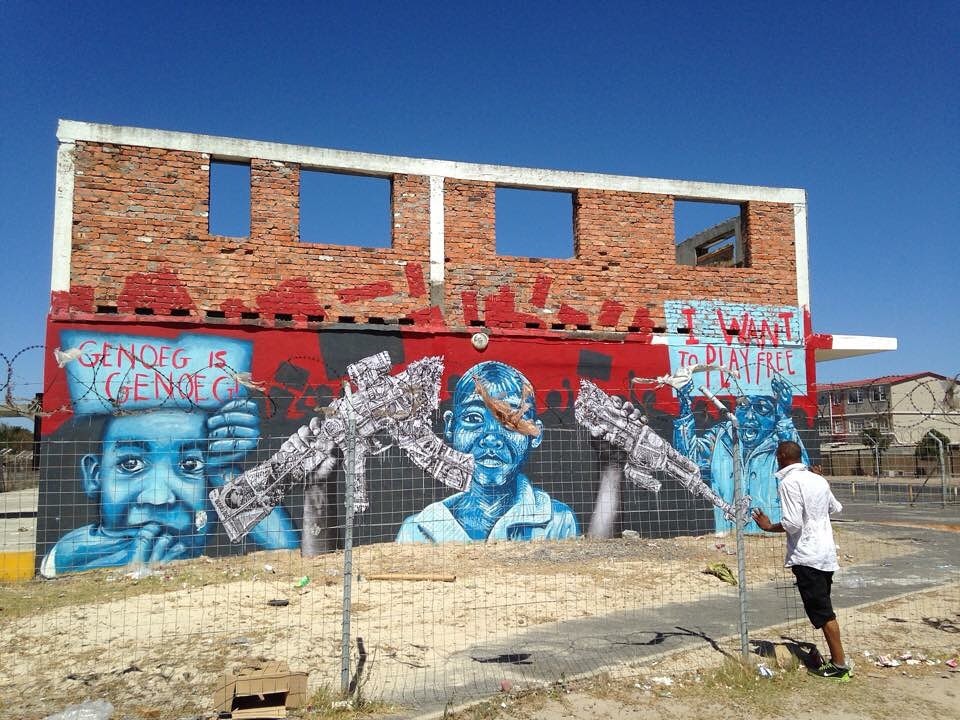
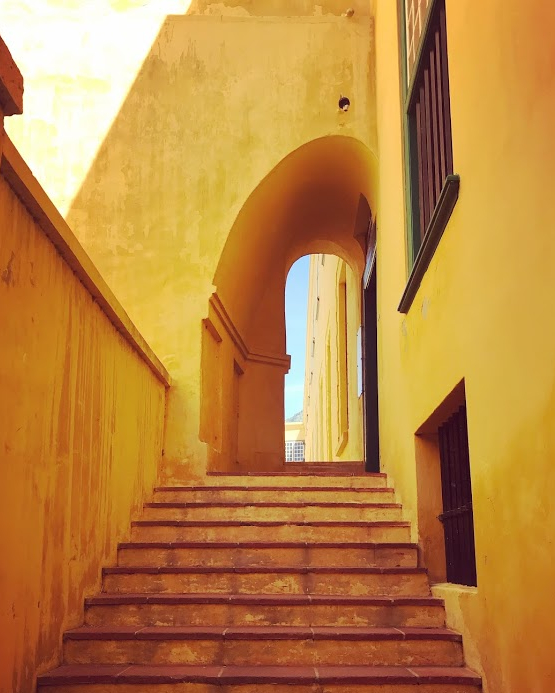
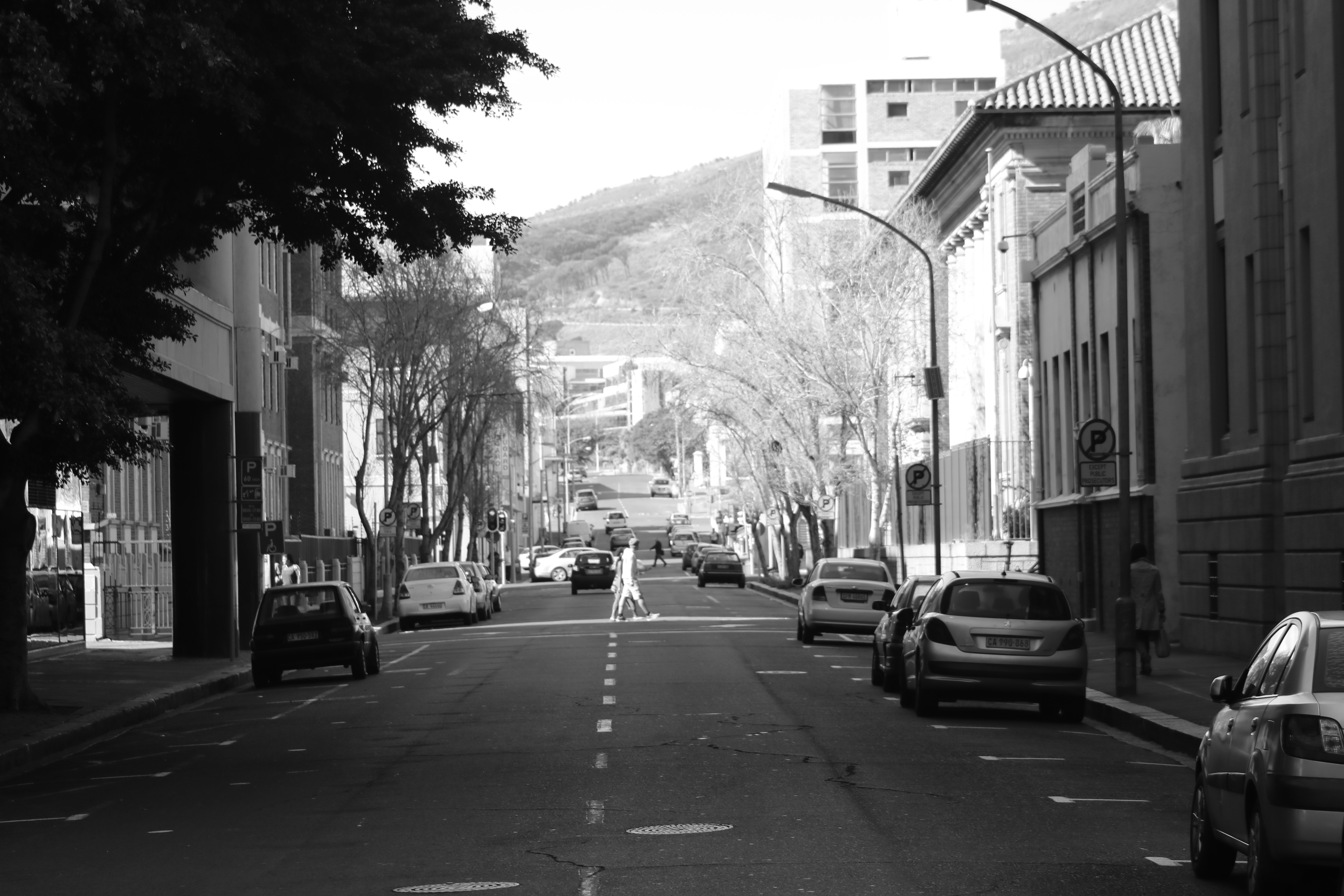
When we dampen the colour on our perspective, we adopt a marginal identity in experiencing the energy of a space. It is far from the glossy covers of tourist brochures that capture mainstream shades and impressions. This photo essay, from the streets of Cape Town city centre, represents the texture and rhythm that is often distracted by colour. In creating depth of dimension, we can explore what connects us beneath the lines that colours draw.

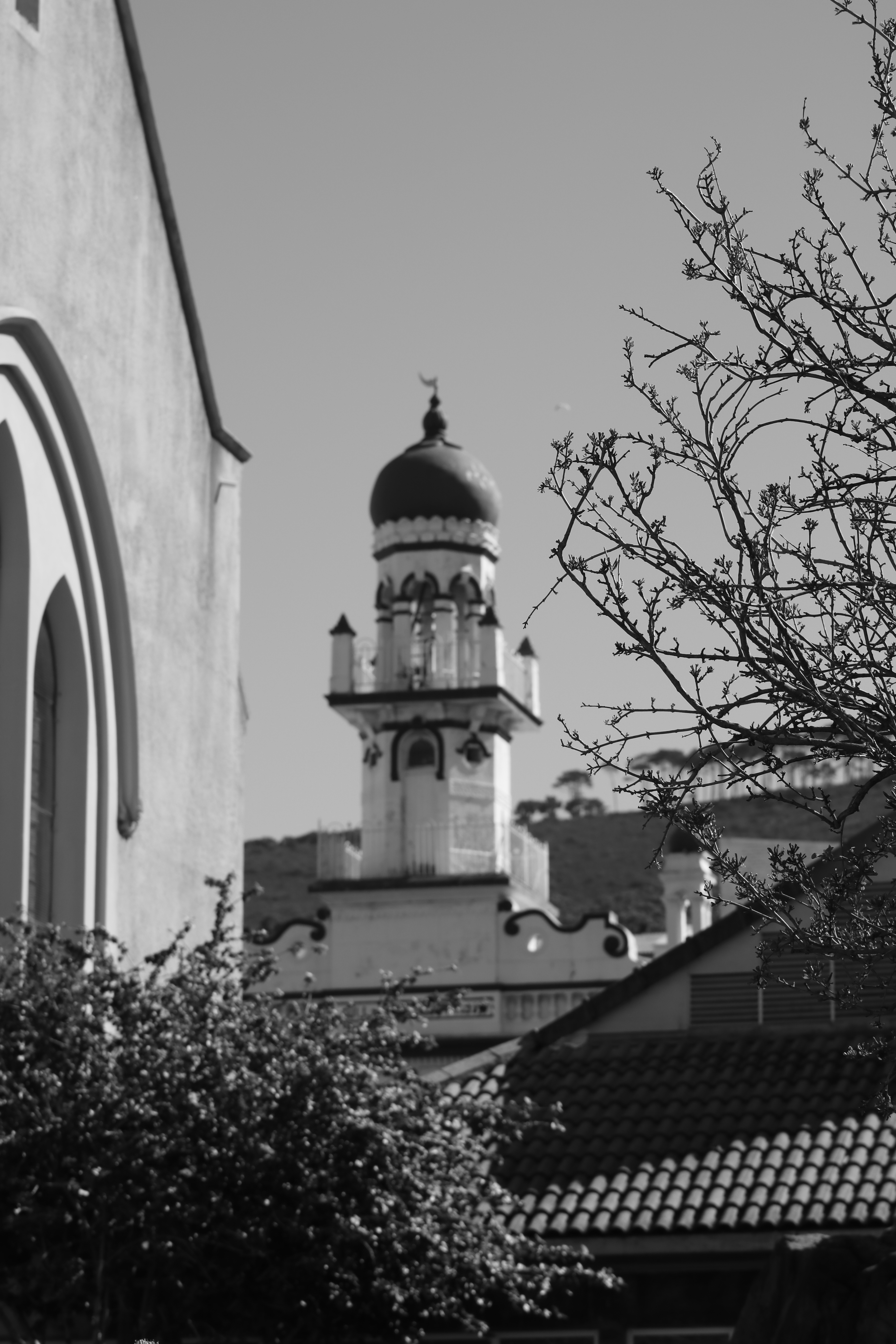
IMG_1027

Minaret of the Quawatul Islam Mosque on Loop Street, framed from the yard of St. Martini Lutheran Church on Long Street.

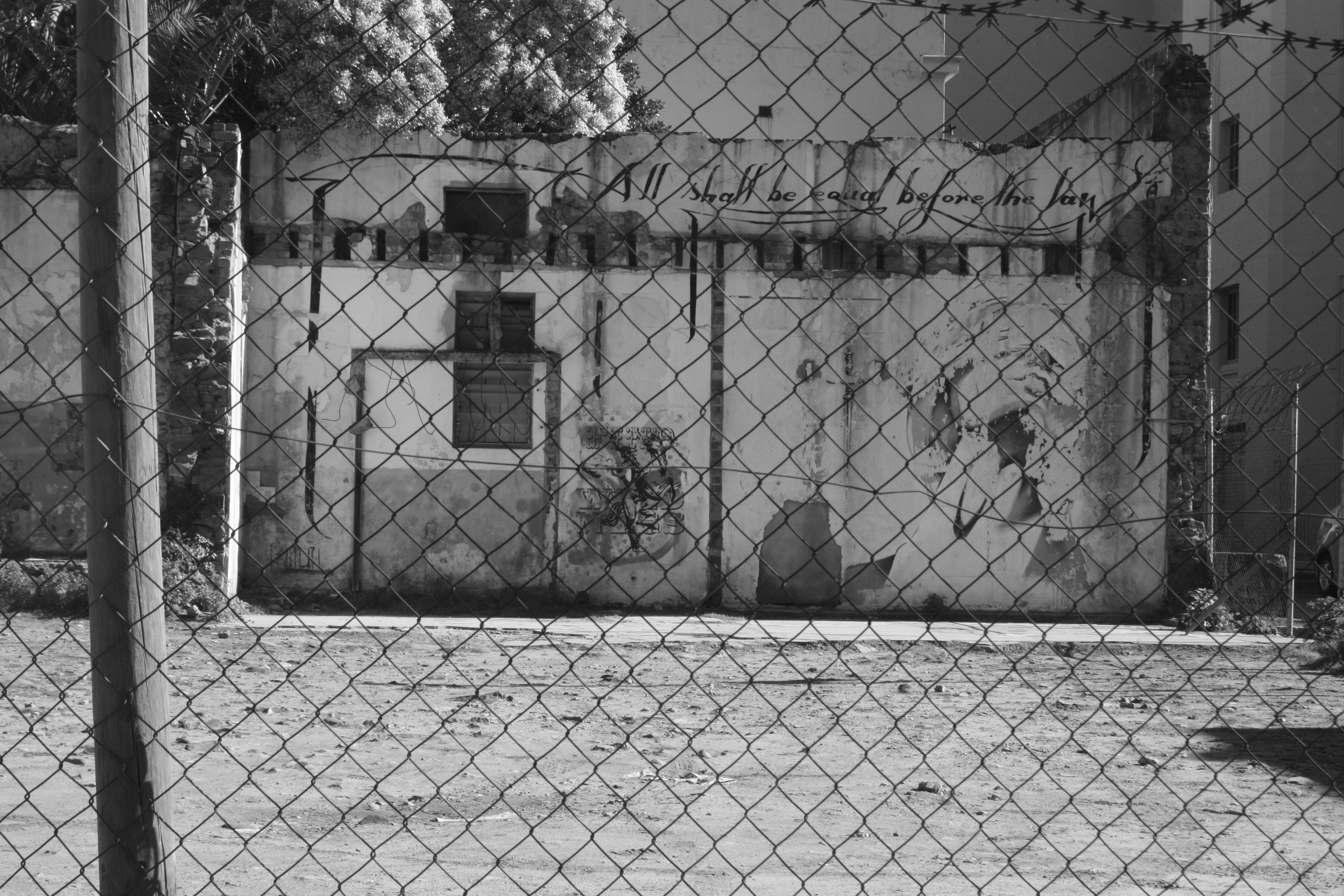
IMG_3421

“All shall be equal before the law” Shot from behind the fence of a yard on Queen Victoria Street near The High Court

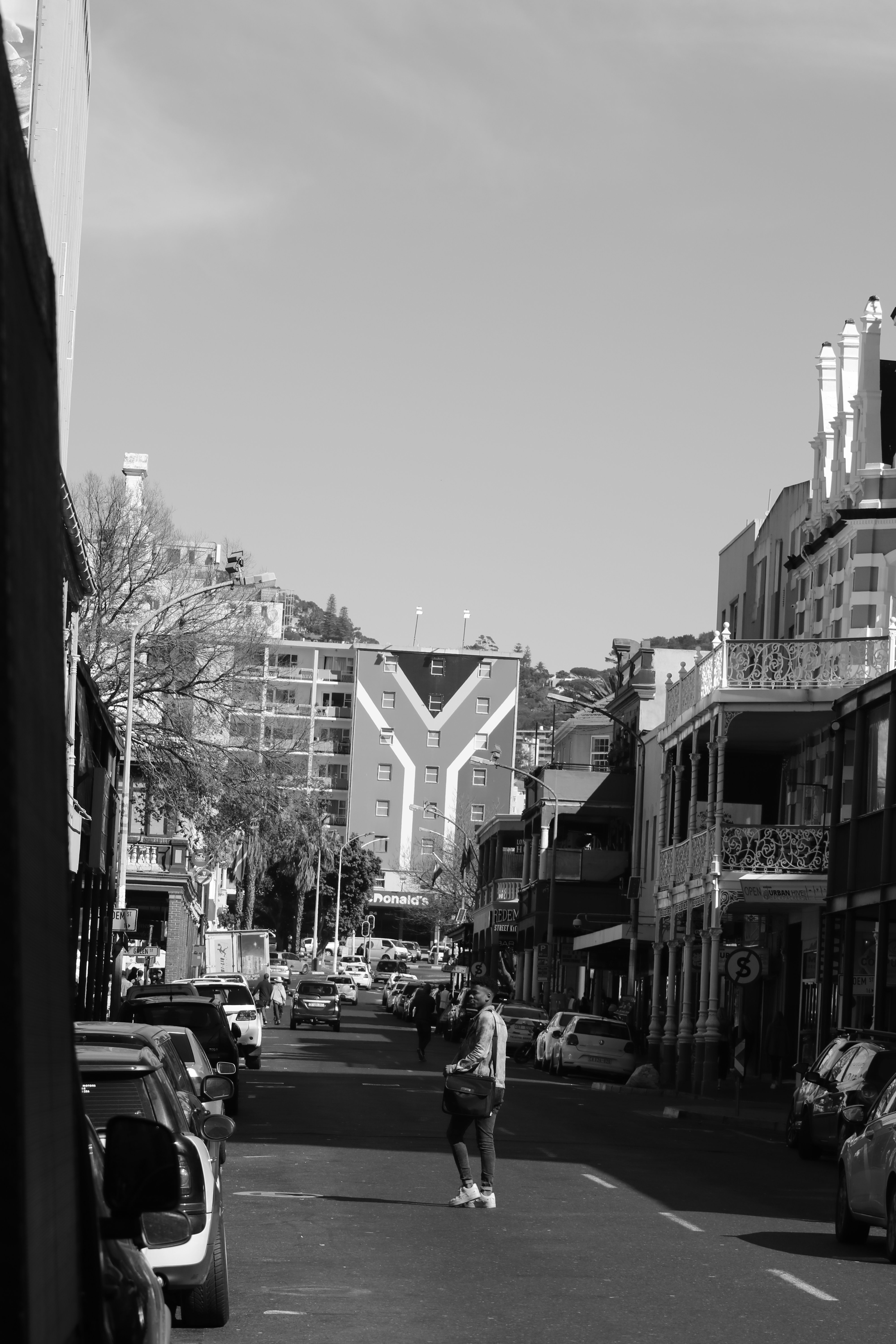
IMG_1018

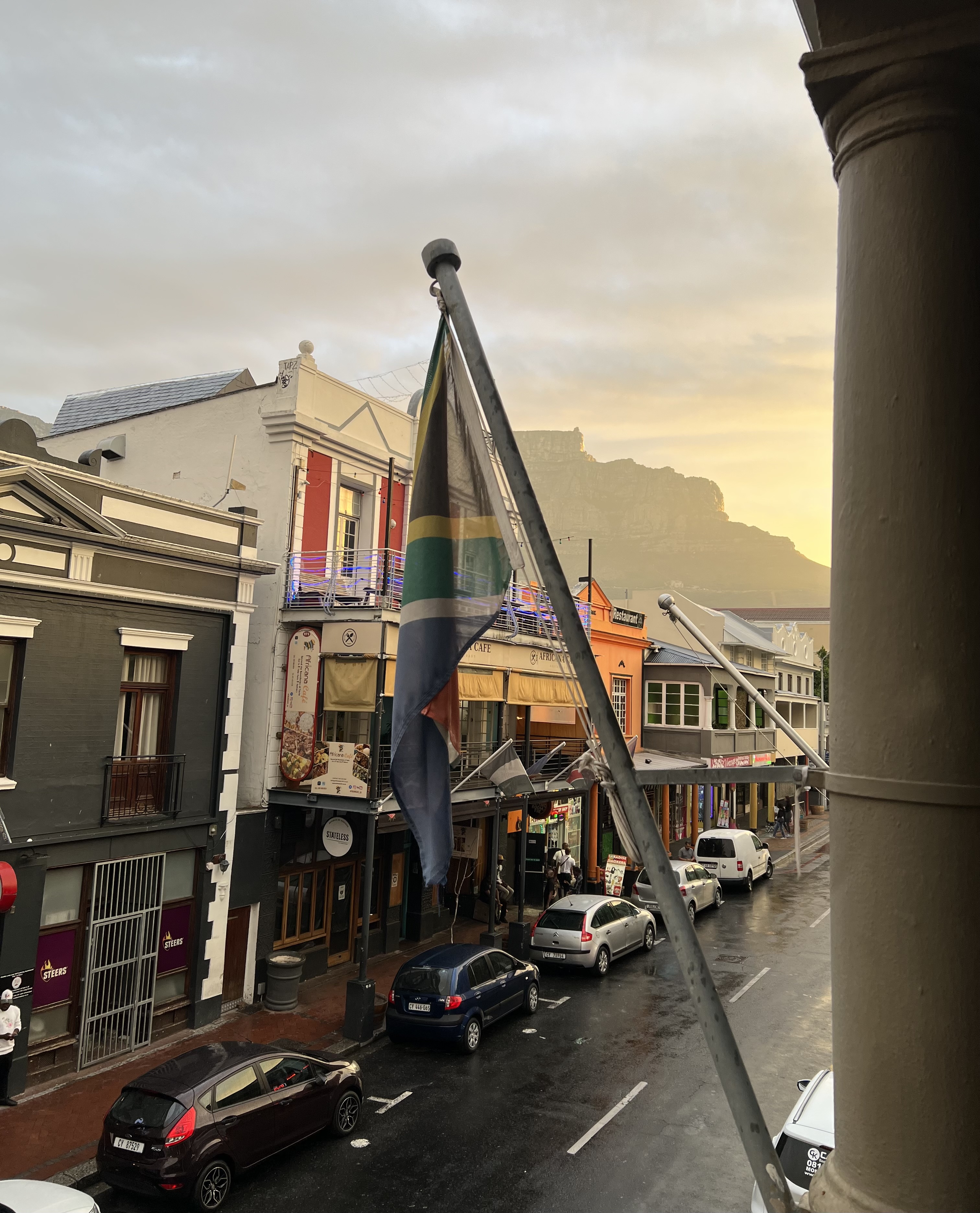
Looking up Long Street towards the flag-draped Overbeek apartment block.

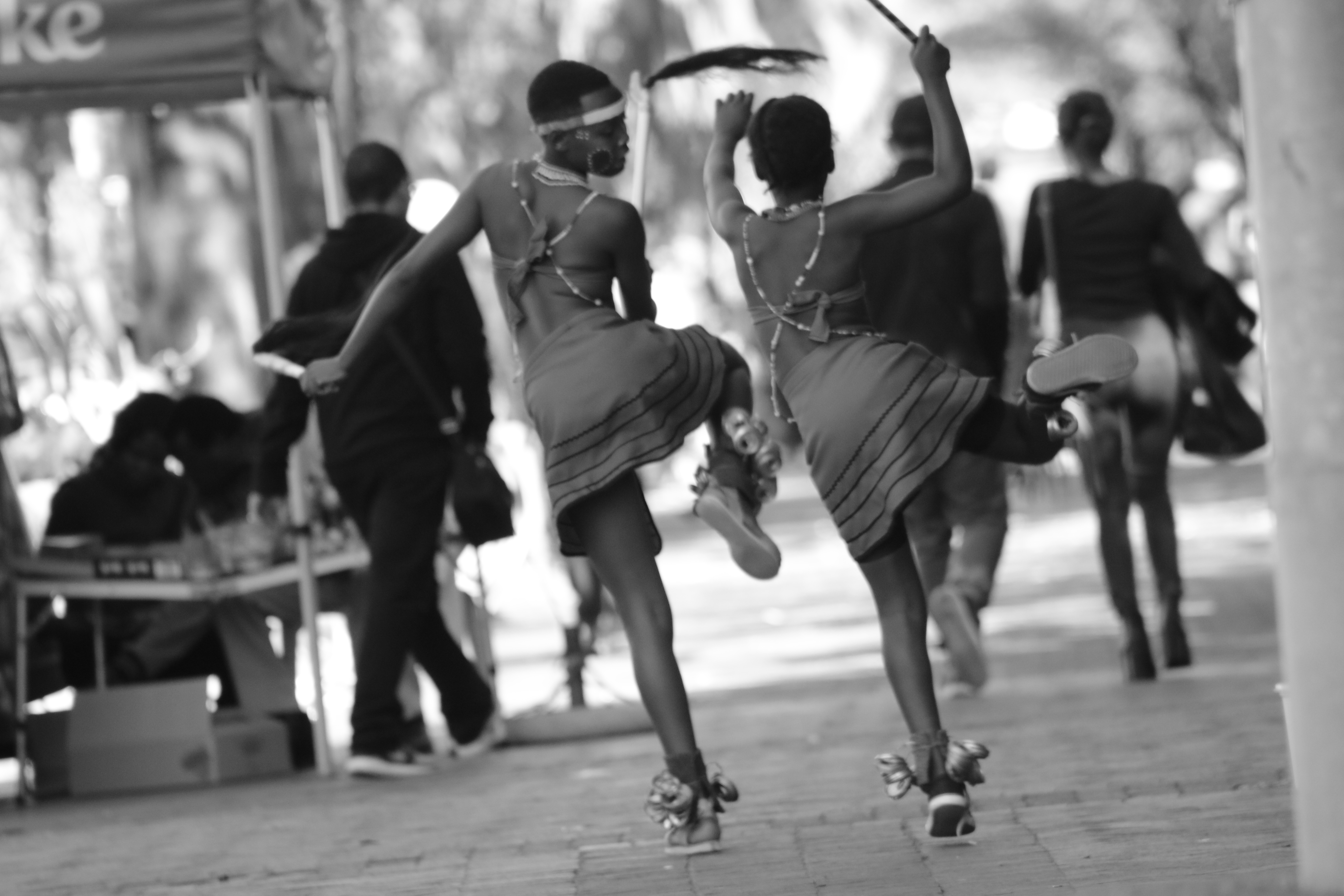
IMG_0923

Dancers at the intersection of Government Avenue and Wale Street, near the Company’s Gardens

IMG_1007

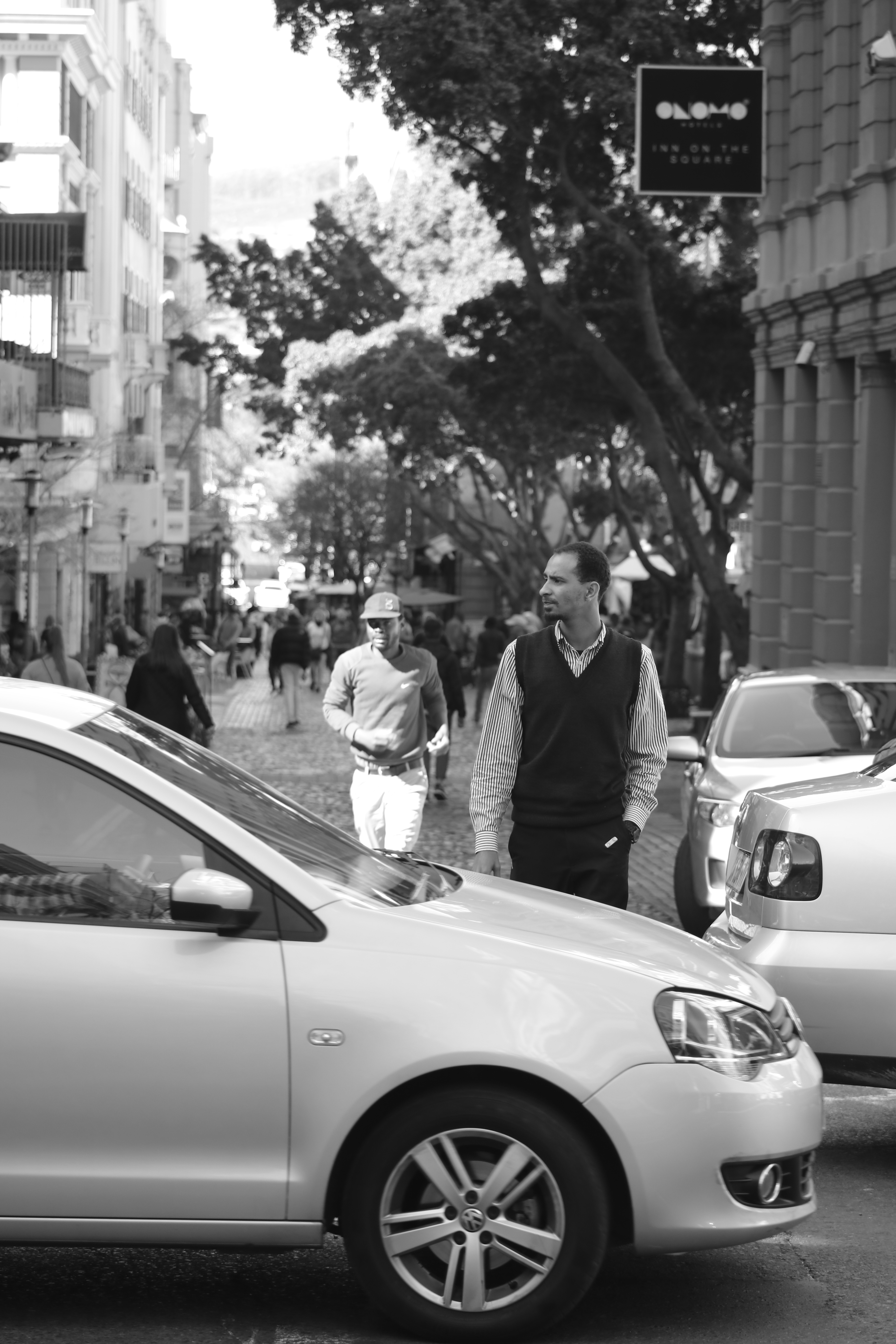
Pedestrians and traffic intersect at the corner of Green Market Square and Long Street

IMG_0294

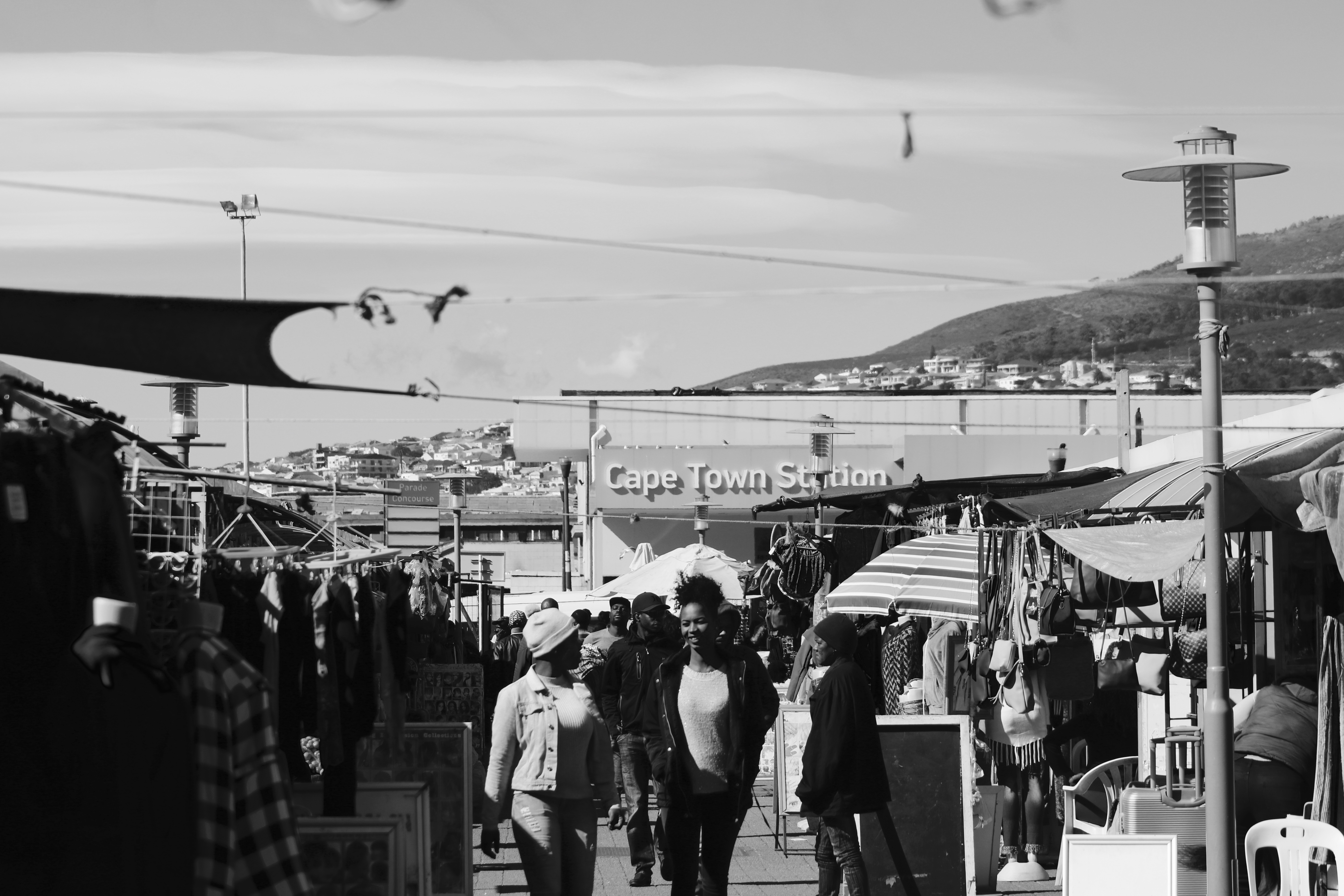
Commuters and shoppers at The Deck on Cape Town Station

IMG_0293

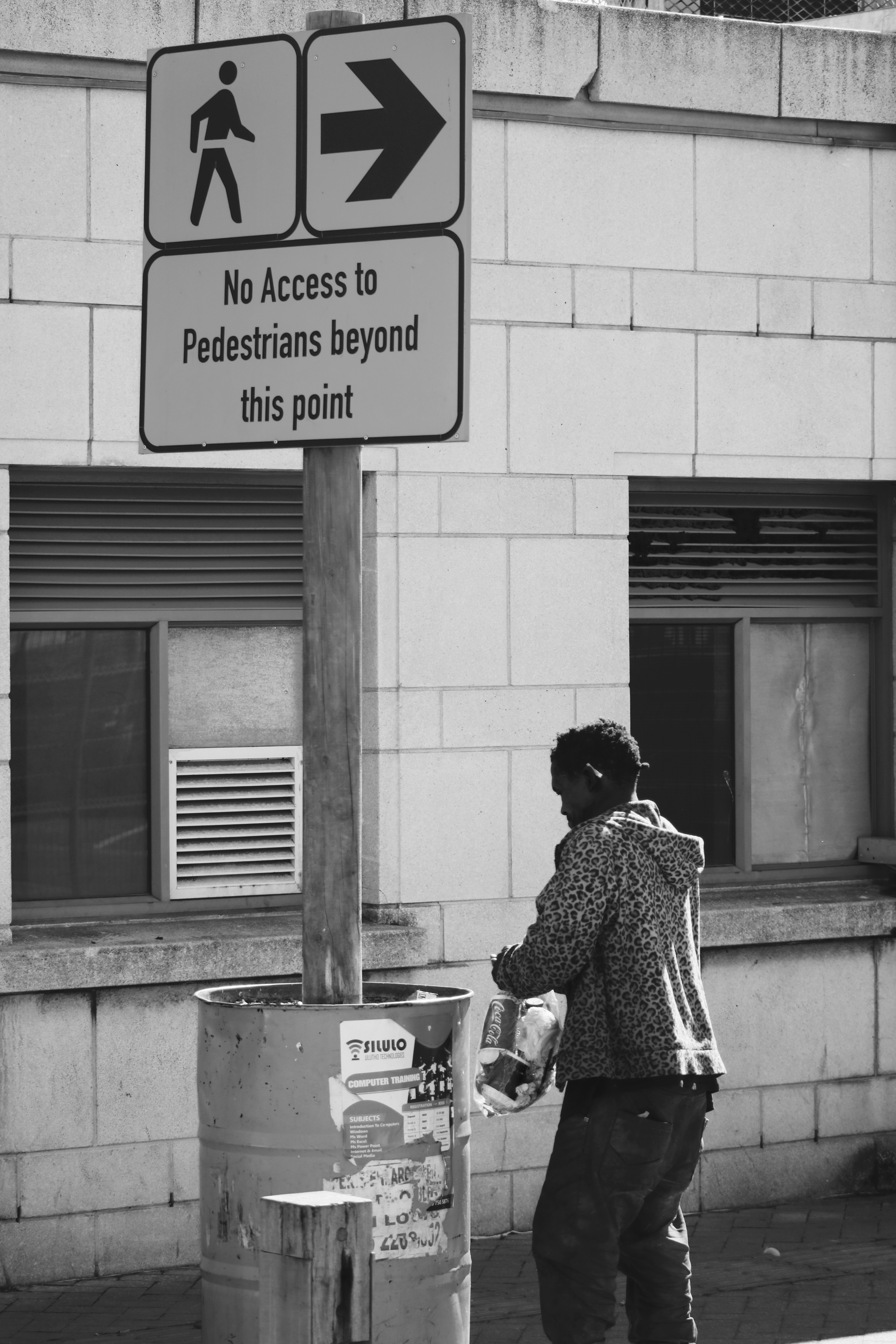
Navigating limited access and opportunity at Cape Town Station

IMG_3451

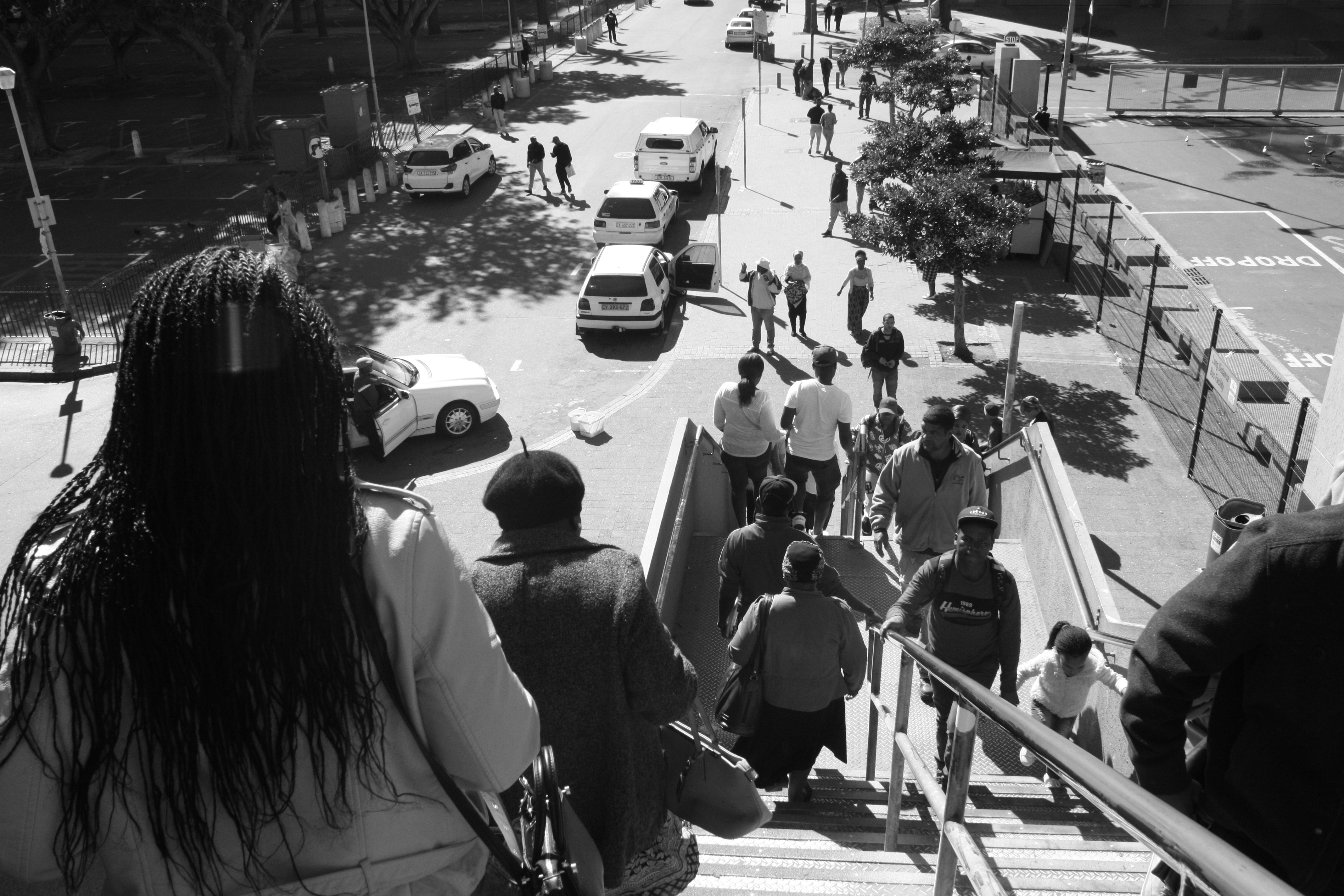
Up and down the steps of the taxi rank on The Deck at Cape Town Station, to and from the central CBD

IMG_0932

From shadow into light, gazing down Caledon Street

IMG_1044

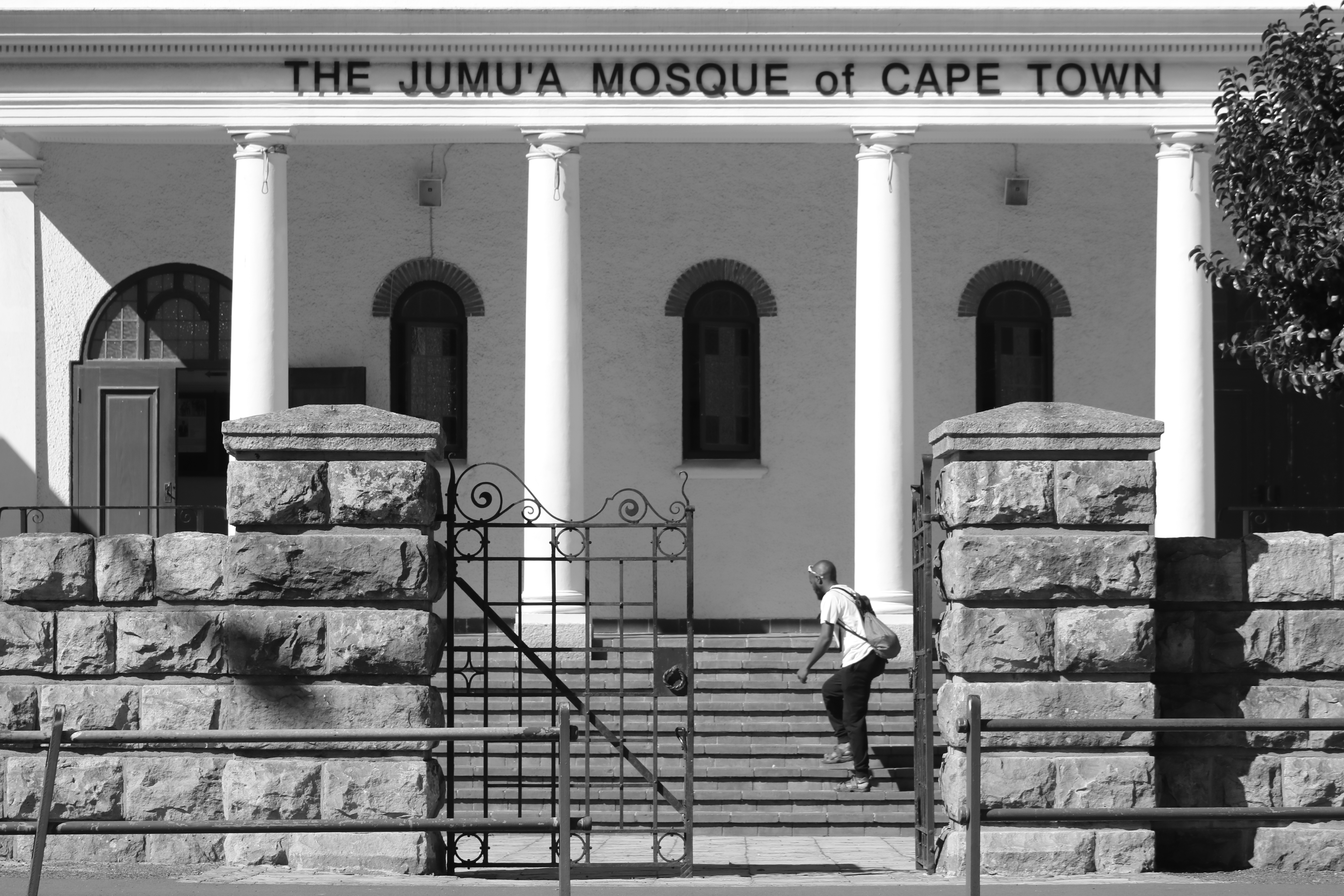
A worshiper entering the Jumu’a Mosque of Cape Town on Orange Street

IMG_1033

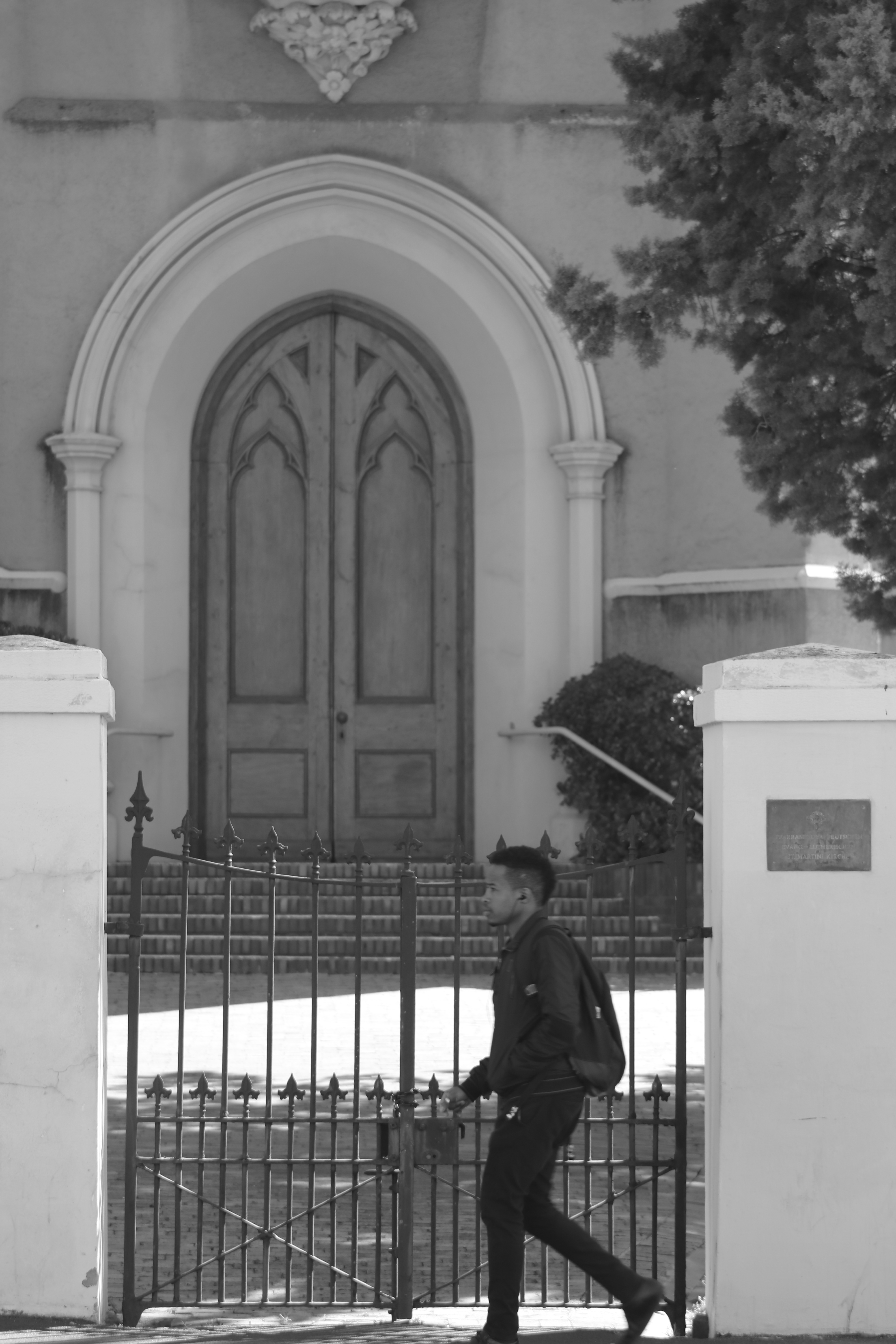
Passing by the St Martini Lutheran church at the top of Long Street


By Merlin Ince and Tashwill America (16m Photography)

Homeless and hopeful

IMG_0875

Ameer makes a living from collecting cardboard and metal cans for recycling

It is very easy to ignore a homeless person. The idea of not having a secure place to live or a weathered appearance conveys a sense of anonymity. Their identity becomes opaque and distant from the mainstream traffic of cities, hastily rushing to work or back home. For those who have neither of these, they struggle to find recognition.  Living on the streets is a marginal existence but there are still stories of dignity behind every face of such hardship.

The City of Cape Town’s mayoral committee for social development has found that there are more than 7 000 homeless people in the municipality. Ameer is one such person. He came to Cape Town from Bloemfontein on a pretentious job offer, expecting to work as a van assistant on overnight truck hauls, with the promise of advancing his interest in motor mechanics. Instead, he was told to guard trucks owned by a businessman who was not prepared to pay the expensive fees of truck stations. Ameer was not remunerated, he was mistreated, and left to fend for himself. With no family or other support network in Cape Town, he took to the hostile streets of the city to make a living.

On any given morning, Ameer can be found outside the Woolworths on Kloof Street where he has an arrangement with the store manager to collect the cardboard from delivery trucks. He also collects empty metal cans which he crushes into flat disks, all for recycling. It is a harrowing mission to transport these waste materials on a makeshift cart about 3km from the CBD to Woodstock, competing with the morning traffic that impatiently hoots at him for getting in their way. This same traffic hurries off to produce more waste that Ameer finds a purpose for. He sells the cardboard for about 70c per kg and the cans for R10 per kg. He makes just about enough to buy some food for the day.

The Centre for Food Security at the University of the Western Cape has found that individuals like Ameer, across the country, save municipalities R 700 000 per year by keeping recyclable material from exhausting landfill sites. But despite the dignity and purpose that Ameer manages to find from wastepicking, he still faces indignation.

Security personnel in the city consider Ameer as a criminal. He is often rudely awakened from the meagre shelter of an alleyway or bus stop by a group of security guards. They have used pepper spray and batons on occasion to wake him up and chase him away: “They think I am going to break into the cars and steal something,” he says. “I just avoid them. I can’t even sit anywhere I want. They watch me like I am going to steal something. That is what I wish for more than anything else, just to be able to walk and sit anywhere. But that creates trouble for me so I just avoid them.”

Thankfully Ameer has been able to experience a kinder face of the city through a clinic in Greenpoint. Even though he is not an outpatient, the facility still provides support for him. Ameer is able to speak with a counsellor, take a shower, and have a meal twice a week. His face lights up and softens when he speaks about the care he receives, like it is an oasis of hope in the midst of a harshly marginal existence out on the streets of Cape Town.

Hope is what Ameer holds on to most firmly, resolving himself not to give in to the tragedy of what brought him to this space: “I do my best everyday with whatever I can get. I still want to go back home to my grandmother in Bloemfontein.” Ameer has been trying to save money to afford transport back home to be reunited with his grandmother, younger brother, and sister. He also has dreams of pursuing a career when he has settled himself again: “I always wanted to work with cars, like a motor mechanic, even to one day own my own workshop, I would be so happy for that.”

Holding hope and adversity is hard to do. Those who live on the margins must bear the strain of this arduous identity everyday, tragically muted by the traffic of mainstream city life, chasing capital. This counterpoint of city life is highlighted by artists such as Brazilian writer Jorge Amado. In the introduction to his novel Captains of the Sands,  Colm Tóibín points out that Amado unearths the dignity of abandoned children on the streets of Bahia in Salvador but the book does not romanticize their story, “it is written to give substance to shadows, to re-create the under-life of the city, to offer the dispossessed an inner life.”

Stories of people like Ameer can help us bring light into peripheral shadows in order for us to re-create cities as more inclusive and respectful spaces. But only if we slow the traffic down, stop, and listen.

Written by Merlin Ince

Nurturing Resilience

Zimingonaphakade, Tefelo, and Cohen embody stories of resilience from the edge


Being at the edge often means that there are one of two options: falling off or rising to new heights. For most youth who live in marginalised neighbourhoods, however, there is not much of an option. They fall deep into the adversities of poverty, incomplete schooling, and unemployment. Without strong socialising agencies such as closely consistent parenting or development programmes, there is little chance that their personal agency can be enabled to rise above the limited resources at their disposal to achieve greatness.

Nurturing resilience is hard and gritty when you are at the edge. But it can be achieved.

As a teenager, Zimingonaphakade Sigenu never considered herself an exceptional student but always adopted an attitude of working hard and working consistently. As a learner at Luhlaza High School in the township of Khayelitsha, she was selected to be part of the University of Cape Town’s 100-Up Programme. It supports Grade 10-12 school learners from neighbourhoods that struggle with socio-economic adversity, coaching and mentoring candidates in order that they can compete on an even plane with youth from more affluent neighbourhoods for places at university.

With such support, Zimingonaphakade soared in her final high school examinations and university studies where she was selected for the Mellon Mays Undergraduate Fellowship Programme at the University of Cape Town (UCT). Since 2002, the programme at UCT has identified and supported exceptional students towards becoming scholars of the highest distinction.

Each year a new cohort of five students are selected at the cusp of postgraduate study to begin sharpening their research talents towards a possible career in academia. Generously funded by the Andrew W Mellon Foundation, the initiative provides regular and structured programming. Fellows receive stipends for term time research activities and further support for summer vacation research projects, faculty mentoring, and partial repayment of undergraduate student loans.

As she reflects on her experience thus far, Zimingonaphakade speaks of discovering new heights: “I am excited about the possibility of being an academic. I never thought about this before, but then Mellon Mays arrived and now I am able to compete with students whom I previously thought were in a different and better league.” Zimingonaphakade admits that transitioning to university life was a huge challenge, especially in her first year, because no-one in her family had attended university before. Initiatives such as the 100-Up programme helped to put her in touch with the resources necessary to strengthen her academic pursuits.

Tefelo Mathibane was also on the 100-Up programme in high school and qualified to study for a degree in Medicine at the University of Cape Town. He attributes much of his foundational success to the programme since it gave him a more competitive edge in mathematics and science, especially given the poor resources he had to contend with at school.

Tefelo maintains these heights of excellence at university. In 2016 he was awarded the Santilal Parbhoo Prize for best study project in molecular medicine.  It was always Tefelo’s ambition to pursue a career in medicine, since he identified a passion for wanting to help people and he is driven by a need to make a difference in combatting diseases such as Tuberculosis in Africa. This was the focus of his laboratory-based project, monitoring the distribution of mycobacterium tuberculosis (MTB) on the human lung system. His curiosity for asking questions and approaching solutions from diverse perspectives kept him up for many a late night on his experiments and write-up, earning him top honours.

Besides Tefelo himself, no-one else seems more excited about his achievements than his father whom he visits during vacation in the Eastern Cape: “He always tells me how proud he is, and fact that I am the first child of his to make it to varsity excites him even more. Whenever I speak with him about my studies, he reminds me that I should continue to work hard and he prays to the Lord that he doesn’t die before I graduate. He wants to see me succeeding.”

Close and consistent parental mentoring is also a critical element in the academic success of Cohen Charles who grew up in the poverty-stricken neighbourhood of Manenberg on the Cape Flats.

Not only is Cohen, and his twin brother Cameron, the first in their family to complete high school but Cohen is also the first person in his immediate part of the neighbourhood to attend university. He has just completed a four-year BA degree programme in Linguistics at the University of the Western Cape. His outstanding academic record has won him several accolades, including membership in the Golden Key Society and Deans Commendations.

Cohen’s story is all the more awe-inspiring in that he was raised by a single parent. His mother Elaine made a concerted effort to mentor her children and make certain that they were not exposed to negative influences in the neighbourhood. When they were still in primary school she would make charts of their maths and put them on the wall so that they could practice. She would make flash cards of their vocabulary and test them everyday after she got home from work. Cohen’s grandmother, who is now deceased, took care of him and his brother while Elaine was at work. They both monitored their homework and Elaine even helped them write essays, making sure that they kept pushing themselves towards higher grades at school and aiming for better results each year.

The highlight of Cohen’s academic journey thus far is that he has been selected to study at the University of Oslo in Norway as a bilateral exchange student. Cohen’s achievement is a powerful story of overcoming adversity and achieving success against all odds; a young man from challenging socio-economic circumstances now taking on the world!

Stories of achieving success against adversity, as seen through the eyes of Zimingonaphakade, Tefelo, and Cohen, are possible but often elusive. Without strong social support, their path towards success is compromised and many youth fall off the edge in marginalised neighbourhoods. For those who are enabled to soar towards new heights, their extraordinary examples of resilience emerge as catalysts for change and transformation; signs and symbols of the agency we ought to become for those straddle a marginal identity.

Written by Merlin Ince
Photograph Credits: Merlin Ince (Zimingonaphakade); Lu Nteya (Tefelo); The Daily Voice (Cohen)


The Shadowed Face of Community Activism

Merlin_43

Community Activist Roegshanda Pascoe outside her home in Manenberg, Cape Town

I first met Roegshanda Pascoe at a Community Safety Forum meeting in Manenberg, Cape Town. It was on an evening in March 2016 when the local authority scheduled an electricity blackout as a load shedding initiative during a time of uncertainty about the country’s energy supply capacity. Roegshanda was lighting a row of candles as I entered the church hall, where residents were gathering to discuss their concerns over the housing crisis and inadequate policing during gang wars.

As a silhouetted figure, against the candlelight behind her, Roegshanda bravely held that volatile space together. Tempers flared and raged, and understandably so! Since the neighbourhood’s inception, as an apartheid ghetto almost five decades ago, little has been done to raise the standard of living for residents here.

When I visited Roegshanda at her home in Manenberg, she explained that housing bylaws have not changed since the dismantling of apartheid legislation. Old rules and systems of allocation still apply, even though they are irrelevant. It is not possible for residents to have private ownership of their units in the three-storey blocks, called Courts. The water meters are not constructed for individual units but for entire blocks. The sewage infrastructure is such that it is all connected to a central system so if there is a blockage about five roads away, then the entire area is affected.

The overcrowding in most homes fuels anger and frustration since there is a competition for space and privacy: “It is everybody stepping on each other’s toes and so there is no space in your house… If there is a Janaza (Islamic funeral), there is not even enough space to bring a body into the house properly for the funeral rituals. It has to be turned this way and that way. No dignity in that.” She believes that the solution is to demolish the Courts in phases and rebuild structures that are more conducive to a better quality of life. People will then get a chance to own their homes, gaining a sense of dignity and purpose.

It is a largely held view that Manenberg’s social demise is due to overcrowding. A resident at the community meeting raised this concern, to strong approval from the gathering, that the neighbourhood was established almost fifty years ago to accommodate 35 000 people but this number has steadily grown to more than 100 000 residents. Roegshanda believes that census figures, which record Manenberg’s population at 58,875, are deliberately tampered with to sidestep the crisis of overpopulation and the responsibility that the local authority would have in order to remedy the situation: “if the full amount of people living in Manenberg would come out, don’t you think everybody would scream My God this place needs a facelift…I took the city officials around to see what is happening in Thames Avenue and they said to me My God can people live like this? Are these humans staying here? And I said Ha! Are you asking me that? Then you must tell your bosses that humans have to live like animals here.

Currently, units are rented on a two-year basis and then renewed afterwards. If heads of households die, there is no assurance that the children will be able to continue living there. Evictions are often carried out in the area and people are stranded with no other place to go. Roegshanda works tirelessly to get lawyers who can defend residents in court. The authorities responsible for evictions are dubbed ‘the red ants’. They arrive on the allocated day, remove all possessions from the house and then lock the premises while families possessions are left on the pavement with their possessions.

Community activism, that attempts to highlight the plight of marginalised and maligned ghettos of Cape Town, is both ignored and misunderstood. Radio stations only highlight protest activity in traffic reports, as though they are another inconvenience to be avoided en route elsewhere. News agendas seldom ever probe the reasons behind protests or take the time to investigate the causes that are being bravely fought for.

Post-apartheid South Africa has been characterised by an increase in community protests, especially since 2004. Wasserman et al (2018) poignantly remind us that this is not merely about service delivery failures but should be seen as “an expression of a wider and more long-standing disenchantment in marginalised communities.” The very act of defiance through protest speaks volumes about the inability and failure of mechanisms such as the media to give voice to a large majority of our country’s poor: “Although service delivery has become the rallying point for protests, it should also be seen as a manifestation of a deeper disillusionment with post-apartheid democracy.”

Community activists are often the only figures of hope in poverty-stricken neighbourhoods. They are largely the most trusted and relied upon individuals since there is a deep-seated mistrust among residents for police and local authority officials. They are close to the heart of people’s struggles and understand the daily complexities that are all too casually brushed over by local government structures who would rather dictate what should be done instead of listening to the real issues at stake.

In the neighbourhood of Hanover Park, another relic of apartheid segregation, a recreational park known as Phillans Park was identified as a priority project by the local authority for an upgrade. Without consulting with residents, workers started construction but within a few days they had to abandon the project due to gang violence. The park has always been a ‘red zone’ since it is an area between two rival gangs. Gangsters therefore shoot randomly across this field, where a government saw it fit to encourage children to play in an upgraded and lavish recreation facility. How utterly useless!

The  presence of gangs, and the high-risk activity they engage in, are not only a threat to the safety of innocent lives in the neighbourhood. Anyone who challenges them does so at great risk to their personal safety. The structure of gangs is such that they do not want to be interfered with by external initiatives of social development that might usurp the power that they wield in communities like Manenberg. They hold these neighbourhoods captive and terrorise residents through wild shooting sprees in their battle for turf with rival gangs. Activists who speak out against them are targeted and threatened. Roegshanda has, on numerous occasions, put up social media posts about being threatened with her own life. Still, she remains resilient.

Despite the heroic efforts of community activists, they face a daily uphill battle to organise communities into action. With meagre support networks and resources, they draw on whatever means they have available to them in order to raise the voices of people who have known little freedom and transformation, more than two decades after the end of apartheid. The efforts of community activists like Roegshanda Pascoe are a heroic struggle for justice and equality, shadowed by the financial greed of neoliberal leaders who have turned their backs on the poor.

Written by Merlin Ince
Reference: Wasserman H, Bosch T and Chuma W (2018) ‘Communication from above and below: Media, Protest and Democracy’. Politikon South African Journal of Political Studies
Photograph Credit: Lu Nteya


The Hustle and Grind of Looking for Work in the Ghetto

IMG_3301

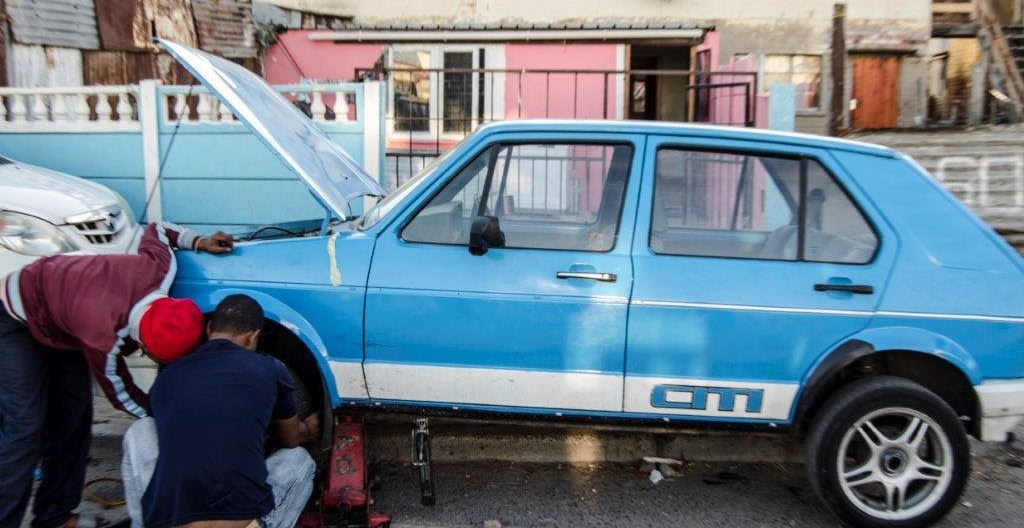
Young men in Manenberg, Cape Town, doing informal vehicle repair work to earn a living

No one ever chooses to live in a ghetto, and the chances of overcoming the structures that keep people there are few. Like many poor neighbourhoods on the Cape Flats in South Africa, ghettos were designed as spaces to contain and segregate people of colour. Uprooted from prime property identified for lucrative development opportunities of the apartheid government, black and coloured people were structurally excluded through the euphamised concept of ‘separate development’. Today, more than two decades since this legislation was dismantled, promises of an open and free society still elude ghetto neighbourhoods. These marginal spaces continue to be ignored like the surrounding highways that direct traffic to distant economic hubs.

Looking for work under such confined circumstances is a shadowed and grim reality that is often lost on the mainstream. Youth like Natheem, who grew up in the historically segregated neighbourhood of Manenberg on the Cape Flats, relate poignant stories of the daily hustle to find work. Along with a group of his friends, who live in the same block, they wash windows and carpets. They perform shopping errands for house-bound residents, and use their combined skills to do household repairs or to fix appliances.

For Natheem, it conveys an almost desperate sense of needing to provide for each day, of having to think about how he will get his next meal, how units can be purchased to feed the electricity meter, how fundamental needs such as cooking and cleaning can be managed: “The most I get is maybe ZAR50 for washing all the windows, kitchen, room, sitting room and maybe make two carpets clean or I also do upholstery like chairs are broken, then I get new material and then I fill that pieces [using] my own imagination. I do that because I won’t give up…if I’m gonna give up then there is nothing.”

Like many other youth growing up in ghetto neighbourhoods, the prospects of Natheem finding a permanent job are slim. He dropped out of school at the end of Grade 9 despite being an exemplary learner who was even selected as Head Prefect at his primary school in Grade 7.

His family was largely supported by his parents who also made a living from irregular domestic work and gardening, but his family suffered great tragedy. Natheem’s mother died of a heart-attack and within two years of her death, his father was caught in the crossfire shootout between police and gangs in the neighbourhood. He died from his injuries. With only Natheem’s older brother providing a meagre income through contract construction work, Natheem felt obliged to leave school and look for work.

Inasmuch as poverty and personal tragedy are common life experiences in neglected neighbourhoods, structural impediments impose further challenges that youth encounter on their education and employment pathways.

According to Statistics South Africa 2011, high school completion rates are as low as 12% among the adult population in ghetto neighbourhoods such as Manenberg, giving way to little motivation and cultural capital to finish school   Unemployment rates are as high as 47% of the total workforce, meaning that youth are in contact with a limited number of people who can provide job referrals and information about job opportunities. These limited social networks confine youth to work role models who cannot inspire them to persevere at school, study further, and pursue professional careers.

At a community meeting in Hanover Park, another historically segregated neighbourhood on the Cape Flats, a high school teacher shared his thoughts on the schooling experiences of learners. The curriculum prescribed by the National Department of Education favours teaching models of small classroom numbers where teachers pay close attention to individual learner needs. There is also a large part of the syllabus that requires homework to be closely supervised by adults. But with classroom numbers averaging between 40 to 50, teachers struggle to keep every learner up to speed. At home where most households are run by single parents, adults have barely enough time to take care of chores and are burdened by the adversities of trying to make a living with little resources available.

Many youth fall through the cracks, with weak foundations in their early education that cannot cope with the incremental pace of studies in higher grades. In many ghetto neighbourhood schools, poor resources result in teachers spending more time on administrative tasks and less time teaching, sometimes as little as 46% of a 35-hour week (Sayed & Motala, 2012:112), leading to learner outcomes that are far below the national standard. Most drop out in Grade 9, at a rate of about 78% (Statistics South Africa, 2011). Their employment expectations are minimal, explains the teacher whom I interviewed: “They don’t think further than what they see. They don’t think doctor, professor, scientist, astronaut. They are happy with getting a job at the local supermarket or hustling on the streets because that is the only thing they know.”

Without a high school certificate, the opportunities for full-time work are very scarce. The demand for labour, through deindustrialisation, has shifted economic focus away from the manufacturing industry towards employment in industries such as tourism, information technology, film, and finance. Jobs that do not require a high school certificate, namely semi-skilled manual jobs, even unskilled manual jobs, have grown slower than jobs that require a high school certificate or even a tertiary education qualification.

Economic sociologists such as Borel-Saladin and Crankshaw (2009: 653) highlight job trends in Cape Town that show a decline in manual work employment for the manufacturing industry, while increases are noted for managerial, technical, and professional jobs as well as middle-skilled clerical, retail and sales jobs.

Excluded from mainstream economic trends, youth in ghetto neighbourhoods become disillusioned and vulnerable. Rose, a 22-year-old single mother in Manenberg, dropped out of school after she failed her Grade 9 examinations. She shared with me her experience of being recruited by an insurance company to conduct door-to-door policy sales. For each policy of ZAR300 that she sold, she received ZAR30 commission. The recruitment process did not require an interview or presentation of a CV. It offered little training and only supported workers with transport to and from areas in which they were required to conduct sales. Rose was often hungry and tired. She was not well versed in the terms of the policy and struggled to explain it to me when I probed the subject during our interview. She sold two policies in the space of ten days and then quit out of sheer exhaustion and frustration.

Her experience of exploitation is also evidenced in her hairdressing services to women in her neighbourhood following a training course that Rose completed at the local community development centre. She would accept to do a job for ZAR10 that would ordinarily cost ZAR100 at a hair salon and often not get paid, with women promising to pay her at the end of the month and then not honouring their commitments.

Without close, consistent, and concentrated intervention, youth in ghetto neighbourhoods face bleak futures in terms of their employability. This intervention needs to begin at the level of basic education, building learner confidence through after-school mentoring programmes. The isolation that youth experience must be counteracted through exposure to career guidance and the cultural capital that empowers them to navigate opportunities such as student financial aid schemes. If they are left to the demise of social structures that prevent them from competing for jobs in high demand, they will always struggle to transform their circumstances.

Without interventions that are designed acknowledge, affirm and develop inherent skill, their experience of work will remain a daily hustle and grind for underpaying and irregular jobs. And for this our society is all the poorer without Nobel laureates, global leaders, and innovators whose talent was ignored and relegated as a marginal identity.


Written by Merlin Ince
References:
1. Borel-Saladin J & Crankshaw O (2009) ‘Social polarization or professionalization? Another look at theory and evidence on deindustrialization and the rise of the service sector.’ Urban Studies 46(3): 645-664.
2. Sayed Y & Motala S (2012) ‘Getting in and staying there: Exclusion and inclusion in South African schools’. Southern African Review of Education 18(2): 105-118.
3. Statistics South Africa (2015) Census 2011: Income dynamics and poverty status of households in South Africa. Pretoria.
Photograph Credit: Lu Nteya


Trapped in Contempt

IMG_5903

On a quiet and chilly afternoon in July 2015 I headed out to Manenberg for a research interview. I was meeting with youth and their families, listening to their stories about how they deal with social hardships in trying to find work. Manenberg is a poor and marginalised neighbourhood on the outskirts of Cape Town.  As a relic of the apartheid-engineered city, residents still bear the anger and pain of being forcefully removed and resettled on these dusty windswept plains of the Cape Flats.

Manenberg’s bustling streets were virtually abandoned on this afternoon, either an ominous sign of a gang fight or a more tempered measure of taking cover from the cold especially since the first rains had fallen. I decided to follow the cue from the presence of fruit sellers who would not have set up shop in the event of any impending unrest. I take my chances, as people do everyday in Manenberg.

As I walk out from one of the apartment blocks,  I am cautioned by the nervous gesture of a young man approaching me. We are on opposite sides for now, of the fence that cordons the territory of the block. He is outside and I am on the inside. He stops and takes a step back. His gaze is steady on me but I drop mine to counter his engagement. He persists. “Are you an American” he calls out, referring to one of Manenberg’s most notorious gangs called The Americans. I laugh nervously, realising the poignant intent of such a question in territory ruled by the rival Hard Livings gang. “No,” I respond feebly, “No I am not.” He continues towards me and we pass at the gate. He glances over his shoulder, “I thought you were an American coming to kill me.” And then with him now on the inside of the fence and I on the outside, he turns to triumphantly announce words that numb me, “I do the killing around here.”

People who straddle marginal identities, particularly gangsters, often display a certain contempt that disturbs us who are outsiders. We interpret it as a cold disregard for mainstream society values and this is what shocks, abhors and horrifies us. We do not live in their world. We live far removed from the brutal realities that have turned little boys playing soccer on the street into knife-and-gun-wielding criminals. And because we live so far away from this world, we do not understand.

This is not an attempt to condone heinous crimes. It is rather an endeavour to discern what breeds such contempt in the hearts and minds of young men who belong to gangs. Many writers have grappled with this question through their work which has won both critical and popular acclaim. One of them is Brazilian author Jorge Amado. His most famous novel, Captains of the Sands, gives an evocative portrayal of a group of street children who operate as a gang, thieving out a living on the streets of Salvador de Bahia. Amado navigates this gritty story with a delicate hand, as a constant reminder that these are little children who have been orphaned and abandoned by the social structures that favour wealth and prestige. The empty warehouse in which they live is a metaphor of the loss they have suffered, of their families and of the comforts that every child deserves in order to know what it is like to belong. Instead they are savagely beaten and punished by police authorities and so-called reformatories. What they long for is the affirming touch and embrace of a mother’s hand, or the warmth of a nourishing meal and a bed to dream the dreams that keep hope alive: “All of them were looking for affection, anything out of that life.”

I don’t think that anyone ever chooses freely to live a life of killing, thieving, or hurting other people unless you are consumed by emptiness, when comfort and love seem like elusive luxuries that you are never entitled to. It becomes a hard and heartless life, as a young man in Manenberg explains about his marginal identity as a gangster. He speaks plainly, with determination and no need for apology, about what it means to defend one’s pride and dignity when you do not have much to hold on to:  “Don’t come running and try to pull me, no. I will hit you. I will make you very sore, you see. You can make me also sore and I don’t care. There’s only sore from the outside but they don’t have a clue what its like to hurt inside you see, so what is that? You gonna stab me, you gonna shoot me, it gonna heal again but the feeling inside can’t heal, my brother, you see no-one can heal this what you feeling inside…”

Is it really a contempt for other human lives and a disregard for mainstream values that characterise the marginal identity of gangsters, or is it rather a contempt for the sense of loss and emptiness from which they cannot escape?

Written by Merlin Ince
Photo: A Street in the Pelhourinho district of Salvador de Bahia