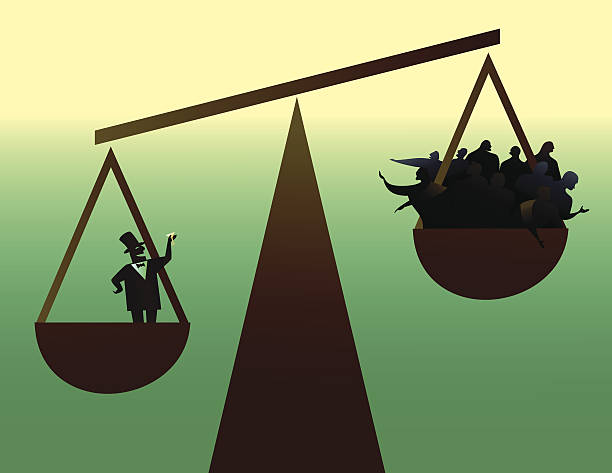
Neatly and comfortably packaged classifications are often suspicious, especially when they are stamped on complex lived experiences. Shorthand labels like low-income country (LIC), lower-middle income country (LMIC), upper-middle income country (UMIC), and high-income country (HIC) feature prominently in global health and development discourse. These terms were designed as statistical categories, but in practice they have become proxies for assumptions about need, capacity, and progress. They have also come to shape how funding is allocated, how research priorities are set, and even how we imagine people’s daily lives across continents.
What happens, though, when these neat categories conceal more than they reveal?
South Africa is one of the stark examples in this regard. The upper middle-income classification suggests, on paper, relative prosperity. It has come to imply that development aid is no longer necessary. The less comfortable and more messy reality, however, is that South Africa is the most unequal society in the world with a Gini coefficient of 0.671.
Even more shocking is South Africa’s Palma ratio. This is the ratio of income share of the top 10% to that of the bottom 40%. While some low-income countries have a Palma ratio of around 1.2 to 2.6, South Africa has a ratio of 72. It is considered obscene inequality, with the wealthiest 10% earning approximately seven times more than the poorest 40%. It underscores the savage concentration of resources and the systemic neglect of the majority, often evidenced in maternal health and early childhood development narratives.
South Africa’s maternal mortality ratio remains stubbornly high, higher than some low-income countries in sub-Saharan Africa. Its child stunting rates, a marker of chronic malnutrition, rival or exceed those of nations with GDP per capita less than half of South Africa’s. Access to quality education is similarly bifurcated, with elite private schools boasting global standards, while vast numbers of public schools operate without libraries, laboratories, or even reliable toilets3.
With the ill-fitting but nevertheless neat classification of “upper-middle income,” donors often tend to look elsewhere, assuming that South Africa can take care of itself. The perception ignores not only inequality but also the deep structural legacies of apartheid, where race, displacement, and economic exclusion still determine life chances. The result is that communities most in need are left underserved, precisely because the classification system tells the world they are no longer “poor enough.”
South Africa is not alone. Other countries also uneasily bear their assigned categories, hiding enormous disparities beneath a statistical average.
Brazil is another upper-middle income country, with one of the largest economies in the world. Still, many communities face ongoing violence, food insecurity, and poor sanitation. The life expectancy gap between wealthy and poor Brazilians can be decades apart. Maternal mortality rates in Brazil’s northeast, which is home to Afro-Brazilian communities historically excluded from wealth, remain high and resemble those of much poorer countries. Between 2017 and 2022, Brazil’s national maternal mortality ratio (MMR) averaged 68.0 per 100,000 live births. Black women, however, faced nearly double the risk compared to White women: 125.8 vs. 64.2 respectively4.
India, classified as a lower-middle income country, has a booming tech sector, a space programme, and billionaires whose fortunes rival those in Silicon Valley. It also has some of the worst child malnutrition statistics globally. Entire regions, particularly rural areas, continue to struggle with preventable diseases, high maternal mortality, and underfunded schools. The average GDP figure hides the fact that 230 million people live on less than $1.90 a day5.
Nigeria, Africa’s largest economy, is classified as lower-middle income. Oil wealth and a vibrant urban middle class project an image of prosperity, but Nigeria is home to over 90 million people living in extreme poverty. Maternal mortality rates are among the highest in the world, and vast disparities exist between the urban elite and rural communities. In 2023, Nigeria suffered 75,000 maternal deaths, accounting for nearly a quarter to a third of global maternal deaths. A regional breakdown reveals draconian inequality, with a woman in north-east Nigeria being 10 times more likely to die in childbirth than a woman in the south-west6.
The danger of comfortable classification labels is that they shape the flow of resources and the scope of intervention. Many donors and international agencies use income classification as a crude eligibility filter. Countries like South Africa and Brazil are excluded from certain types of aid, under the assumption that they have “graduated.” Global health studies often concentrate on “low-income” countries, leaving out populations in middle-income countries that face equal or greater risk.
This skews evidence and reinforces blind spots. International recognition of inequality is too often confined to rhetoric. The persistence of categories like “upper-LMIC” allows policymakers to sidestep difficult questions about redistribution, justice, and the politics of exclusion. By using GDP averages as shorthand for development, we end up reproducing the very inequalities we claim to fight.
If we are serious about addressing human need, we must rethink how we classify countries. GDP per capita is a blunt instrument that obscures more than it illuminates. Alternative measures exist, such as the Multidimensional Poverty Index, inequality-adjusted Human Development Index, and disaggregated national statistics, that provide a more nuanced picture.
Development discourse must stop equating national wealth with social well-being. Inequality is a defining characteristic of modern economies, and it is often the main driver of poor health, poor education, and poor life chances. Funders and policymakers need to ask harder questions: Who is left out within these “middle-income” countries? Whose suffering remains invisible while averages tell a story of progress? How can aid and policy mechanisms reach those who live in wealth-shadowed poverty?
The point is not to shame or to single out any one country. South Africa, Brazil, India, and Nigeria are all navigating complex histories of colonialism, exploitation, and rapid growth. The common thread here is the way global classifications erase inequality, leaving millions effectively invisible to international solidarity.
It is time to name this masking for what it is. It is a failure of imagination. It is a refusal to look beyond averages. To call South Africa “upper-middle income” and stop there is to indulge in comforting fictions while ignoring the daily crises of maternal death, malnutrition, and failing schools. The challenge to funders, policymakers, and global institutions is simple but urgent. It is a call to move beyond the shorthand, to recognize inequality, and to not let the language of classification become a justification for neglect.
Written by Merlin Ince
References:
 Marginal Identity