Much of my work as a proposal writer has centered around telling stories. It is about creating compelling stories so that funders come to invest in development projects, from research centers to bursary programmes, initiatives to combat the effects of climate change, soup kitchens, facilities for people with disabilities, land restitution projects, skills development and employment projects. In all of this I often wondered if I could work myself out of a job. Would it be possible to create situations where funding proposals and grants are no longer needed, where research and students are fully funded, communities are resilient to climate change, the hungry can always be fed, disability is no longer an obstacle, land is equitably distributed, youth have skills and opportunities to participate fully in the economy. The more I thought about this, the more elusive I began to feel and the more I realized that we will always have a need for proposal writers and development offices, as long as inequality and injustice persist. I became convinced that the work of development aid, philanthropic grants, donor funding, are not just encapsulated within the moral obligation of the act of giving but rather a matter of social justice: of restoring and preserving human dignity. The more that I looked at my work from this perspective, the more disturbed and uneasy I became, because I realized how the work of humanitarianism can also run the risk of being misplaced in a world at odds with itself, how the power contained within aid can also act to stifle the same human dignity that it seeks to liberate.
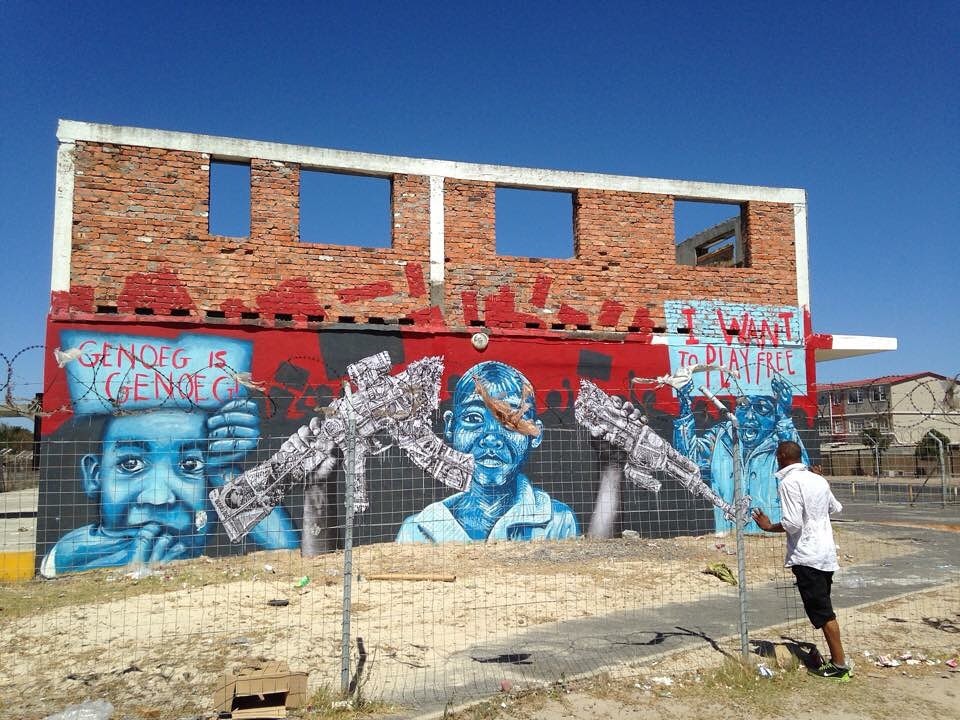
In this reflection I would like to share some of my disturbing thoughts and uneasiness, in the hope that you may join me in being somewhat iconoclastic about misplaced notions of humanitarianism. I will begin by outlining my perspective or frame of reference, formed by my personal background, work experience and reading within this field, then applying this perspective on situations that give examples of misplaced humanitarianism, before going on to reflect on how a redistribution of power may help to address marginalization, most especially as we face the terrors of conflicts, climate change, and ultraconservatism.
Perspective on Humanitarianism
I grew up in the community of Chatsworth in the South of Durban in South Africa, a neighbourhood that was constituted as one of the ghettos of apartheid’s forced removals programme. It was a tough place to live, cut off and isolated from the leafy suburbs that we saw heralded in newspapers and magazines as the legitimate pathways to success. Inasmuch as the trauma of this social isolation manifested in social ills such as poverty, unemployment, alcohol and drug abuse, violence, and gangsterism, it was also a place where we celebrated birthdays, went to school, climbed trees, played games like Gooli Ganda and Hopscotch on the road, where people got married and raised families, and most importantly where we could also go to a neighbour and ask for something we didn’t have and no matter how little your neighbour had for themself, you would never walk away empty-handed. The idea of giving was very much embedded in the survival mechanism of a ghetto community, that we are in this together and all we have is each other. So, our notion of dignity came from the sense of reliance we had on each other. Much later on in life I stumbled on a quote from John Mbiti which resonated well with my experience of finding dignity: “I am because we are and since we are, therefore I am.” (Mbiti, 1969: 106)
My experience of working in development offices has brought me to a closer understanding of some of the origins of humanitarianism and what almost every state in the world has committed to, as outlined in the Geneva Conventions. As John Pringle and Matthew Hunt (2015: 1) point out, formal notions of humanitarianism originated in the context of war and arose very much from what has come to be known as the Duantist tradition, from the work of the Red Cross, pertaining to the “action of saving lives, alleviating suffering, and restoring and promoting human dignity among adversity and animosity. This understanding has broadened to include “natural disasters, famines, disease outbreaks, population displacement, and systemic social injustices relating to poverty, inequality, and neglect. Such problems of human suffering, or crises of humanity, overwhelm local capacities and thereby demand assistance.”
Writers such as Thomas Pogge (2008: 3) have helped to shift this conversation further by equating humanitarianism with the struggle for human rights and social justice. He makes the point that we largely concede that the affluent should do more to help the poor but this is seen as a demand of charity and not as a demand for justice. He says: “the existing radical inequality is deeply tainted by how it accumulated through one historical process that was deeply pervaded by enslavement, colonialism, even genocide. The rich are quick to point out that they cannot inherit their ancestor’s sins. Indeed. But how can they then be entitled to the fruits of these sins: to their huge inherited advantage in power and wealth over the rest of the world? If they are not so entitled, then they are, by actively excluding the global poor from their lands and possessions, contributing to their deprivations.”
As one who has grown up under circumstances of deprivation and isolation, I concur. I agree that this framing of humanitarianism, as a conduit of social justice and dignity, reveals the discordance of efforts that set out to provide assistance while replicating the circumstances that created this need for help.
Replicating Inequality and Commodifying Suffering
Dambisa Moyo (2009: X), in one of her many widely acclaimed works, Dead Aid, presents a riveting account of how the intentions behind development aid have been thwarted by geopolitical rivalries and self-serving interests and brought about socio-economic regression rather than progress, particularly in Africa. This is evidenced in the stark reminder that between 1970 and 1998, when aid flows to Africa were at their peak, the poverty rate in Africa actually rose from 11% to a staggering 66%. This was largely because aid was concentrating on creating client regimes of political and economic benefits to donor countries, thereby strengthening aid dependency and keeping beneficiary countries in a perpetual child-like state.
Moyo’s (2009: 44) famous mosquito net scenario is an apt anecdotal expression of how this happens: “A mosquito net maker in Africa manufactures around 500 nets a week, employing 10 people who, in turn, support up to 15 relatives. However hard they work, though, they cannot make enough nets to combat the malaria-carrying mosquito. Along comes an international movie star who rallies Western governments to collect and send 100,000 nets at a cost of a million dollars. The nets arrive and the good deed is done. With the market now flooded with foreign nets, our local mosquito net maker is out of business, with his ten staff jobless and unable to support 150 dependents.” The aid-dependency model has eroded whatever fragile chance for sustainable development that existed, whereas the goal of aid should be on creating good public institutions that ensure long-term benefits.
Going back to our perspective of humanitarianism as “serving the interests of beneficiaries, rather than political, religious, or other agendas, avoiding manipulation by economic or geopolitical strategic interests,” (Pringle & Hunt 2015: 2) Moyo demonstrates how aid has in the past served the interests of donors and neglected the opportunity to empower local structures towards self-sufficiency.
Another more visual example of humanitarianism neglecting the cause that it intended to champion, is one that many of us probably encountered as our first experience of humanitarian fundraising appeals. Many writers, for example Dennis Kennedy (2009: 2), have raised the issue of the ethics of representation, how funding agencies have tended to exploit images of human suffering. Much of the imaging of the Global South is in fact framed around images of the anonymous hungry child or homeless refugee and these images are therefore contradictory in effect since it raises social consciousness but it also discards that which is most human about the beneficiary, that is their autonomy, their identity, their agency, their dignity. As Costas Douzinas (2007: 19) explains: “undifferentiated pain and suffering has become the universal currency of the South and pity has become the global response of the North.”
A number of studies have probed this notion of the commodification of suffering, through the use of images by funding agencies to illicit emotional responses that result in increased donations for a particular cause. The People in the Pictures report by Save the Children (Warrington & Crombie 2017) and the RADI-AID Research project (Girling 2019), for instance, have fielded public opinion about the use of negative imagery in fundraising and found challenging recommendations for AID agencies to tell more authentic stories about the individuals featured in their communication, to give greater context about community members, about local development workers, about successful endeavours undertaken by beneficiaries, such that they are represented with identity, dignity, and agency. Denis Kennedy (2009: 23) argues that we can bring about this shift in consciousness from the public as external spectators, to a civic, engaged humanitarian public and in this way agencies would be able to stop commodifying suffering and rather “mobilize compassion for deeper and more fundamental engagements.”
Power and Empowerment
The representation of identity, dignity, and agency reminds us of a huge elephant in the room when we talk about aid and that elephant goes by the name of power. Power is at play from the moment an NGO writes a letter of enquiry, sends a concept note, or develops a proposal for a funding agency. Fatima Asif et al (2020: 3) point out that power imbalances lie at the heart of philanthropy since funders hold the money, or power, over beneficiaries but there are also different ways of wielding power and while much of this presentation has pointed out the blindspots of aid in its various forms, let us spend a moment considering the ways in which aid works to fulfil its intention of raising agency and restoring dignity.
Indeed, funding agencies, government development departments, philanthropic organizations wield an incredible amount of power. They have the power to take risks, to innovate, to advocate, and exercise independence (Asif et al 2020: 4). The rebalancing of power within the context of inequality and social injustices, which give rise to the need for aid, involves capacitating individuals and communities. Going back to Moyo’s mosquito net illustration, therefore, the power that was directed externally could have been invested in building structures that capacitate local communities to exercise their agency and achieve self-sustainability. This is where grants that provide capital, provide training and expertise, with a comprehensive outlook on long-term goals, rather than just short-term efficacious intervention, makes for deeper engagement and lasting impact.
Certainly, a funding agency cannot provide funding to a single organization to do everything but they hold the power of influence and to garner added support for the organizations that they fund. More and more philanthropic organisations are going beyond providing only financial support but also using their power of influence to network with other funding agencies to provide supplementary support for organizations through staff secondments, directly sourcing service-providers, making use of their own in-house services and expertise for projects undertaken by beneficiaries of their grants. Many philanthropic organizations are also realizing their responsibility to advocate on a national and regional level through mobilizing for policy and finance commitments from governments around the causes they support, and in that way helping to build structural frameworks on which NGOs can attach their efforts and continue to hold governments accountable.
Equally important is the role that beneficiaries play among funding agencies and philanthropic foundations, in the sense that they are not merely confined to receiving grants according to prescribed expectations and agendas, but rather that they participate in the discussions around these agendas and are intricately involved in setting expectations. It is encouraging to see how many Boards of philanthropic foundations have made a place at the table for beneficiaries to provide the insights into pathways that need to be forged for greater impact. In this way, foundations build stronger relationships with NGOs and enable them to determine for themselves where the funding is most needed rather than spending endless hours filling out prescribed funding templates and onerous reports that take precious time and expertise away from the actual work that changemakers need to get on with. This also involves foundations sharing resources and expertise with monitoring and evaluation, in a way that is customized to the unique culture that NGOs practice and more closely aligned with their own voice. In a similar light, we find that donors are relinquishing the power of representation and passing on the communication tools to beneficiaries to capture aspects of their lives which they value the most and to write their stories in ways that they would like the world to understand. It is indeed a liberating sense of enabling personal agency and in this way humanitarianism takes on a decolonial identity inasmuch as it advocates for the reclamation of agency and the restoration of dignity. There is a reciprocal energy here, as Fatima Asif et al (2020: 15)remind us, because “NGO’s cannot achieve their mission without funding and funders cannot achieve their mission without the work of NGOs”. And so in this rebalancing of power we do in fact realize that we are in this together, and all we have is each other.
Inasmuch as humanitarianism has sometimes struggled in the balance of power, aid, and dignity, there are far more ways in which it can triumph and ways in which we can make good on our intentions to right the wrongs that have created the need for aid. The crisis that we have been thrown into, through the atrocities of numerous national and regional conflicts, of climate change disasters, of movements that push back against inclusive and progressive policies, all of this is very much akin to circumstances of a ghetto in terms of the isolation and dislocation we experience. Even though this is a dark place right now, it is also an opportunity to refine our intentions. Arundhati Roy (2020: 214) wrote about the COVID-19 pandemic as a portal for distillation and reclamation, which is still very appropriate for the circumstances we experience at this time. She says “we can choose to walk through it, dragging the carcasses of our prejudice and hatred, our avarice, our data banks and dead ideas, our dead rivers and smoky skies behind us (we can choose to walk through it dragging all this behind us), or we can walk through lightly, with little luggage, ready to imagine another world and ready to fight for it.” So here we are in a time of conflict and change, distilling and refining our ideas. Let us acknowledge the uneasiness, the disturbance, the discomfort, and the uncertainty because it enables us to be self-critical and accountable and to take responsibility for each other’s sense of dignity.
By Merlin Ince
____________________________________
References:
Mbiti J S (1969) African Religions and Philosophy. Oxford: Heinemann.
Pringle J & Hunt M (2015) ‘Humanitarian action’ in ten Have, H (ed) Encyclopedia of Global Bioethics. Heidelberg: Springer.
Pogge T W (2008) World poverty and human rights: Cosmopolitan responsibilities and reforms. Cambridge: Polity Press.
Moyo D (2009) Dead aid: Why aid is not working and how there is another way for Africa. London: Penguin Books.
Kennedy D (2009) ‘Selling the distant other: Humanitarianism and imagery – ethical dilemmas of humanitarian action’. The Journal of Humanitarian Assistance 28: 1-25.
Douzinas C (2007) ‘The many faces of humanitarianism’. Parrhesia Journal 2: 1-28.
Warrington S & Crombie J (2017) The people in the pictures: vital perspectives on Save the Children’s image making. London: Save the Children.
Girling D (2019) Radiaid research: A study of visual communication in six African countries. Radi-Aid: Oslo.
Asif F et al (2020) A rebalancing act: How funders can address power dynamics. NPC: London.
Roy A (2020) Azadi: Freedom, fascism, fiction. London: Penguin Books.
 Marginal Identity